
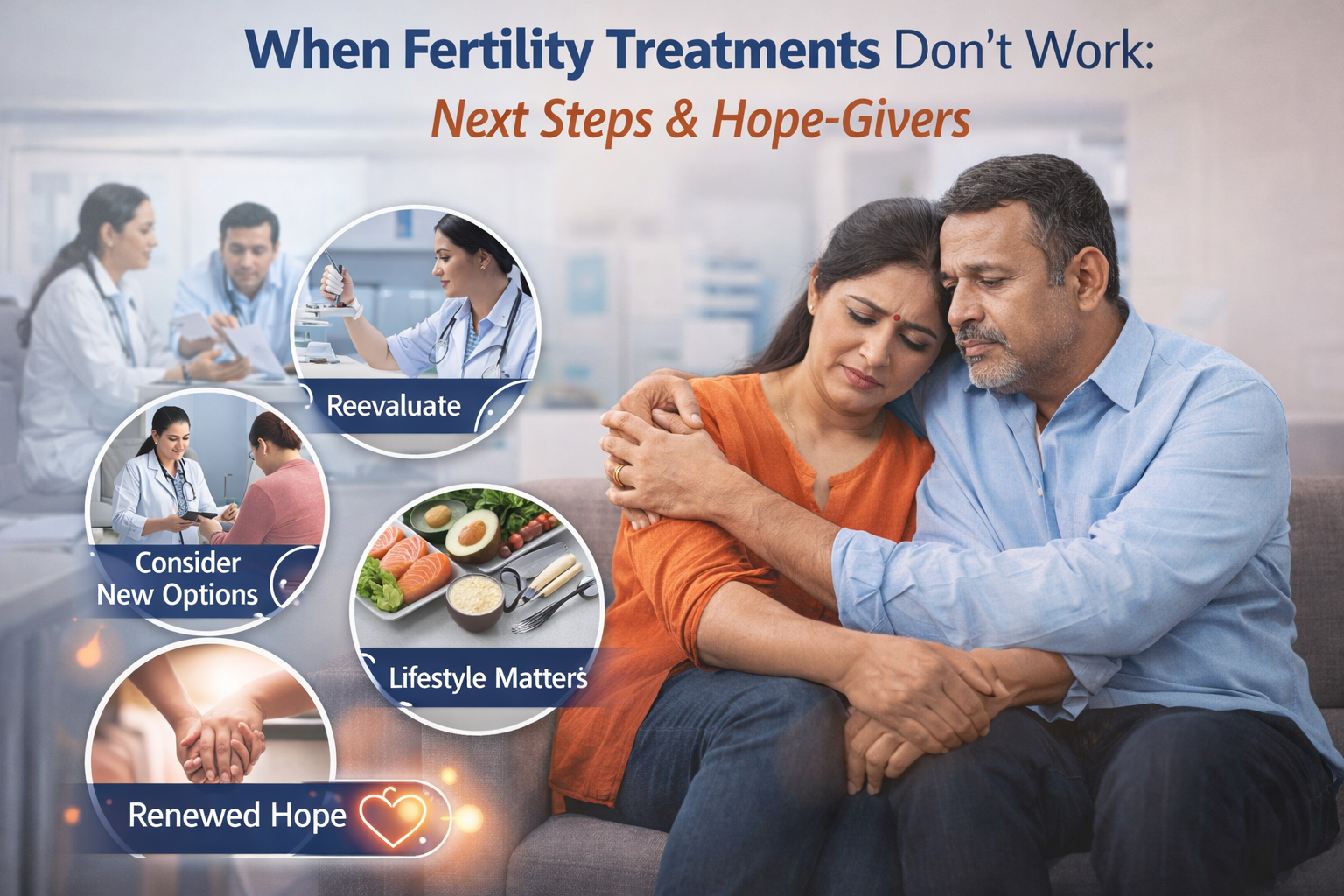
14 Jan When Fertility Treatments Don’t Work: Next Steps & Hope-Givers
Trying to conceive is deeply personal, and when repeated Fertility Treatments do not bring the expected outcome, couples often feel exhausted, heartbroken, and lost. You may have followed every instruction, taken medications diligently, adjusted your lifestyle, and invested emotionally and financially yet the pregnancy test still shows negative.
If you are at this stage, know this first: you are not alone, and your journey is not over. When fertility treatments don’t work, it doesn’t mean hope is lost. It means it’s time to pause, reassess, and move forward with clarity, compassion, and renewed direction.
This blog explores the next steps couples can take, while also focusing on emotional healing and realistic hope-givers.
Understanding Why Fertility Treatments May Not Work
Fertility treatment failure is rarely due to a single cause. Often, it is a combination of biological, lifestyle, and emotional factors affecting both Female Fertility and Male Fertility.
Some common reasons include:
• Age-related decline in egg or sperm quality
• Poor embryo development or implantation failure
• Undiagnosed uterine or genetic issues
• Hormonal imbalances
• Sperm DNA fragmentation
• Chronic stress and lifestyle factors
• Recurrent pregnancy loss
• Unexplained infertility
Sometimes, even with advanced technology, the body needs a different approach not necessarily more treatment, but better-tailored care.
Step 1: Take a Pause — Not a Stop
After failed cycles, many couples feel pressured to “try again immediately.” While urgency matters, a short pause can be powerful.
A pause allows:
• Physical recovery from hormonal medications
• Emotional healing and stress reduction
• Review of previous treatment cycles
• Space to regain confidence and clarity
Taking a break does not mean giving up. It means preparing better for what comes next.
Step 2: Re-Evaluate Both Partners Together
Fertility challenges are not just a female issue. Nearly 40–50% of infertility cases involve Male Fertility, either alone or combined.
A comprehensive reassessment may include:
• Repeat semen analysis with advanced parameters
• Sperm DNA fragmentation testing
• Hormonal evaluation for men
• Review of stimulation protocols for women
• Uterine cavity assessment
• Immunological or genetic testing (if indicated)
When treatments don’t work, the solution often lies in rethinking the approach not repeating the same one.
Step 3: Address Lifestyle Changes That Truly Matter
One of the most underestimated factors in fertility success is Lifestyle Changes. Medical treatment works best when the body is supported holistically.
Lifestyle changes that support fertility include:
• Balanced nutrition rich in antioxidants
• Maintaining healthy body weight
• Regular moderate exercise
• Adequate sleep and circadian rhythm balance
• Reducing alcohol and quitting smoking
• Managing stress through yoga, meditation, or therapy
For men, lifestyle improvements can significantly enhance sperm quality within 2–3 months. For women, metabolic and hormonal balance plays a crucial role in implantation and pregnancy maintenance.
Step 4: Explore Advanced or Alternative Treatment Options
If basic treatments haven’t worked, your fertility specialist may suggest advanced options based on your medical history.
These may include:
• Modified IVF protocols
• Blastocyst culture and embryo selection
• Donor egg or donor sperm programs
• Surgical correction of underlying issues
• Fertility preservation strategies
• Personalized hormonal support
The goal is not just achieving pregnancy but achieving a healthy, sustainable pregnancy.
Step 5: Consider Emotional and Mental Health Support
Repeated failures can silently affect mental health, relationships, and self-worth. Feelings of guilt, blame, anger, and isolation are common.
Emotional support may include:
• Fertility counselling
• Couple therapy
• Support groups
• Mind–body fertility programs
Healing emotionally is not separate from medical success it is deeply connected. When emotional stress reduces, hormonal balance and treatment outcomes often improve.
Hope-Givers: What Keeps the Journey Meaningful
Even when fertility treatments don’t work initially, many couples eventually succeed sometimes through unexpected paths.
Realistic hope-givers include:
• Better diagnosis after failed cycles
• Improved protocols based on previous learnings
• Lifestyle-driven fertility improvements
• Emotional resilience and stronger partnerships
• Options like donor programs or adoption
• Renewed self-belief and acceptance
Hope does not always look the same for everyone. Sometimes, hope means redefining success not abandoning it.
Choosing the Right Fertility Care Matters
When facing repeated failures, the experience and philosophy of the fertility clinic become critical. A patient-centric Fertility Clinic in Delhi focuses on:
• Honest conversations, not false promises
• Individualized treatment planning
• Time-bound, ethical recommendations
• Emotional and psychological support
• Transparency in expectations and outcomes
Trust, communication, and compassion are as important as technology.
Final Thoughts: Your Story Is Still Being Written
Fertility struggles can shake even the strongest individuals. But failed treatments do not define your worth, your strength, or your future.
Every step successful or not teaches something valuable about your body, your relationship, and your resilience. With the right guidance, supportive care, and mindful lifestyle changes, many couples find renewed direction and hope.
If treatments haven’t worked so far, don’t lose heart. Sometimes the journey takes longer but it still leads somewhere meaningful.
Frequently Asked Questions
Is it normal for fertility treatments to fail?
Yes. Fertility treatments do not guarantee success in the first attempt. Multiple factors influence outcomes, especially age and underlying conditions.
Should we stop treatment after repeated failures?
Not necessarily. It’s important to reassess, modify the approach, and address lifestyle and emotional factors before deciding the next step.
Can lifestyle changes really improve fertility after failed treatments?
Yes. Lifestyle changes can significantly impact both Male Fertility and Female Fertility, improving treatment response and overall reproductive health.
How many fertility treatment cycles are considered reasonable?
There is no fixed number. The decision depends on age, diagnosis, emotional readiness, and medical advice.
How do couples stay emotionally strong during this phase?
Open communication, counselling, shared decision-making, and compassionate medical support help couples cope and move forward together.

Dr. Shipra Gupta is a renowned obstetrician, gynaecologist, and infertility specialist, boasting over 17 years of invaluable clinical, teaching, and research experience. She has successfully performed more than 1200 cycles of IUI, IVF, natural cycle IVF, donor egg, and FET cycles. Dr. Gupta specializes in managing complex cases involving Advanced Maternal Age, PCO, Poor Ovarian Reserve, endometriosis, and unexplained infertility. Her expertise extends to treating recurrent IVF failures and male infertility.