
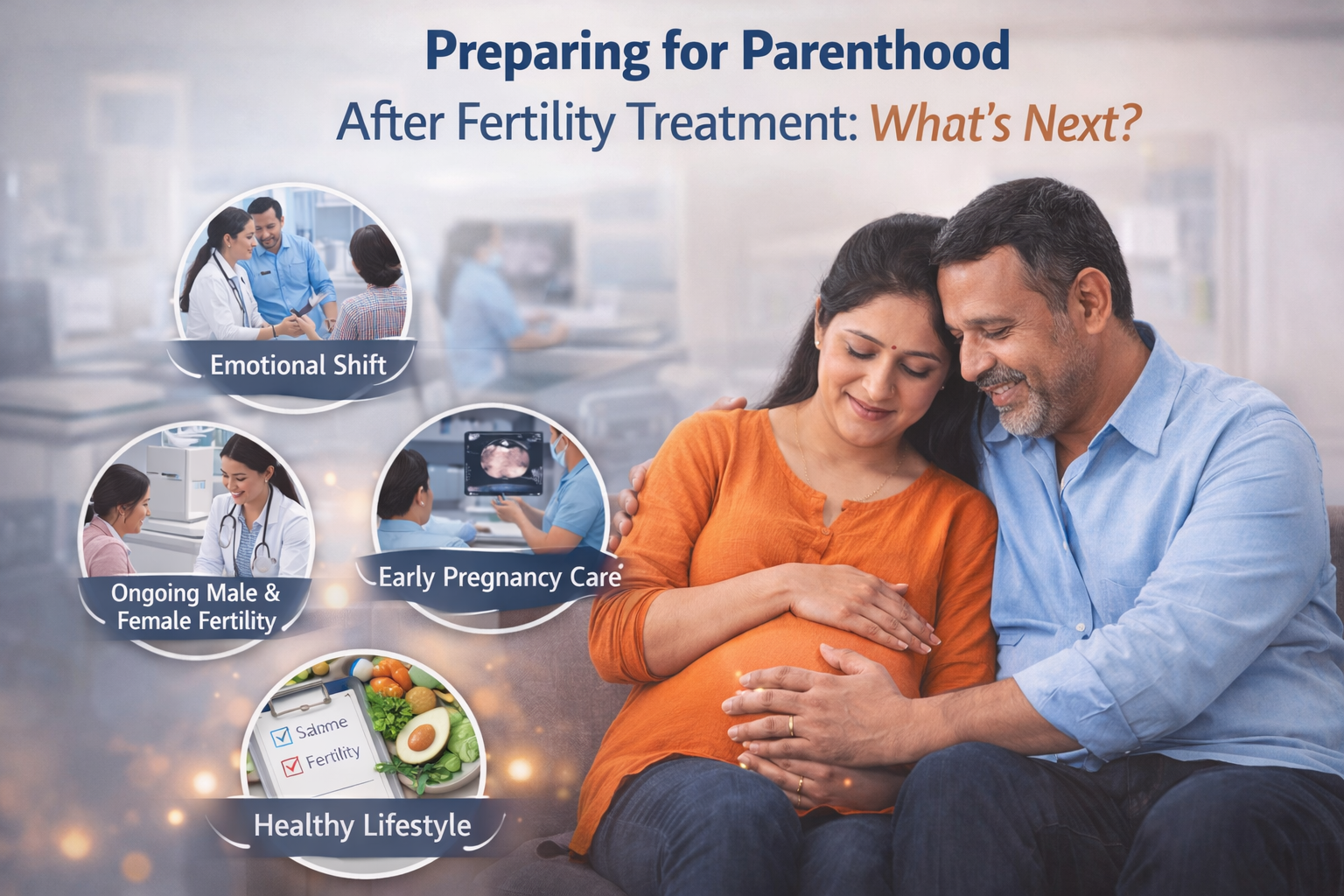
19 Jan Preparing for Parenthood After Fertility Treatment: What’s Next?
Completing fertility treatment is a major milestone one filled with relief, joy, and often a quiet sense of disbelief. For couples who have undergone Fertility Treatment, the journey to conception may have been long, emotional, and demanding. Once pregnancy is achieved, a new question naturally arises: What happens next?
Preparing for parenthood after fertility treatment involves more than routine pregnancy care. It requires emotional adjustment, medical vigilance, and a deeper understanding of how Female Fertility and Male Fertility factors may continue to influence pregnancy and early parenthood. This phase is about transitioning from trying to conceive to nurturing a healthy pregnancy and future family.
The Emotional Shift After Fertility Treatment
Many couples expect instant happiness after a positive pregnancy test. While joy is real, it’s also common to feel:
• Anxiety about pregnancy loss
• Fear of “something going wrong”
• Difficulty trusting good news
• Emotional fatigue after years of stress
These emotions are normal. Fertility treatment can condition the mind to expect setbacks. Acknowledging these feelings and seeking reassurance is a healthy part of preparing for parenthood.
Supportive counselling and open communication with your care team can ease this emotional transition and help couples feel more secure as they move forward.
Early Pregnancy Care After Fertility Treatment
Pregnancy after assisted conception is often monitored more closely, especially in the first trimester. This does not always mean there is a problem it simply reflects cautious, proactive care.
Early care may include:
• Frequent ultrasounds to confirm growth and heartbeat
• Hormonal support if required
• Monitoring for complications related to age or medical history
• Guidance on nutrition, activity, and rest
Close follow-up helps ensure stability during the most sensitive phase of pregnancy and reassures couples who may still be carrying emotional stress from earlier struggles.
Female Fertility History and Pregnancy Planning
A woman’s fertility history continues to matter even after conception. Conditions that affected Female Fertility such as PCOS, endometriosis, low ovarian reserve, or hormonal imbalances—may influence pregnancy management.
Doctors may focus on:
• Blood sugar and thyroid balance
• Blood pressure and weight management
• Risk of preterm labor or miscarriage
• Placental health and fetal growth
With personalized monitoring, most women go on to have healthy pregnancies despite earlier fertility challenges.
Male Fertility: Still Relevant After Conception
Once pregnancy is achieved, Male Fertility is often overlooked but the partner’s role remains crucial.
Male health impacts:
• Emotional support during pregnancy
• Genetic contribution to fetal health
• Long-term family wellness
If male fertility issues were linked to lifestyle factors, continuing positive habits such as good nutrition, exercise, stress reduction, and avoiding smoking or alcohol benefits not only sperm health but also future parenting energy and emotional presence.
Parenthood is a shared responsibility, and preparing together strengthens the couple’s bond.
Lifestyle Adjustments for a Healthy Pregnancy
After fertility treatment, lifestyle choices play a powerful role in sustaining pregnancy and preparing for parenthood.
Helpful habits include:
• Eating a nutrient-rich, balanced diet
• Maintaining gentle physical activity
• Prioritizing sleep and mental rest
• Reducing stress through mindfulness or yoga
• Avoiding exposure to toxins and pollutants
Lifestyle stability supports hormonal balance, immune health, and emotional resilience—key elements for a healthy pregnancy and smooth transition into parenting.
When to See a Fertility Specialist Again
Many couples wonder about when to see a fertility specialist after pregnancy is confirmed. While care may transition to an obstetrician, fertility specialists often remain involved during early pregnancy especially if conception occurred through assisted methods.
You should reconnect or continue consultation if:
• You have a history of recurrent pregnancy loss
• You experience unusual symptoms or bleeding
• You were advised ongoing hormonal support
• You need emotional reassurance during early weeks
Fertility care doesn’t end with conception—it evolves into supportive pregnancy guidance.
Preparing Mentally for Parenthood After Infertility
Parenthood after infertility often feels different. Couples may:
• Feel overprotective or anxious
• Delay sharing pregnancy news
• Struggle to feel “normal” compared to others
These responses are common and valid. Preparing mentally means allowing yourself to enjoy milestones at your own pace and letting go of guilt or comparison.
Parenthood is not defined by how easily you conceived but by how deeply you love and care.
Building a Supportive Care Network
A strong support system makes the transition smoother. This may include:
• Your obstetrician and fertility specialist
• Nutritionists and counselors
• Supportive family or peer groups
• Reliable medical information from trusted sources
Global health bodies such as the World Health Organization emphasize holistic maternal care recognizing physical, emotional, and social well-being as equally important.
Clinics like Fertibless follow this integrated approach, supporting couples beyond treatment and into confident parenthood.
Looking Ahead: From Treatment to Parenthood
Fertility treatment teaches patience, resilience, and deep appreciation for life’s milestones. As you prepare for parenthood, remember:
• It’s okay to feel cautious even when things are going well
• Asking questions is a sign of strength, not fear
• Your journey has already made you emotionally prepared for parenting
This new chapter is not the end of a struggle it’s the beginning of a deeply meaningful phase of life.
Frequently Asked Questions
Is pregnancy after fertility treatment considered high-risk?
Not always. Some pregnancies need closer monitoring, especially in early stages or due to age or medical history, but many progress normally.
Should we continue lifestyle changes after conception?
Yes. Healthy habits that supported fertility also support pregnancy and long-term family health.
Does male fertility history affect pregnancy outcomes?
Male fertility factors mainly affect conception, but overall male health and lifestyle continue to influence family well-being.
When should we transition from fertility specialist to obstetric care?
This varies. Many clinics guide couples through the first trimester before transitioning fully to obstetric care.
Is emotional anxiety common after fertility treatment?
Very common. Past experiences can create fear even after success. Counseling and reassurance help couples enjoy pregnancy more fully.

Dr. Shipra Gupta is a renowned obstetrician, gynaecologist, and infertility specialist, boasting over 17 years of invaluable clinical, teaching, and research experience. She has successfully performed more than 1200 cycles of IUI, IVF, natural cycle IVF, donor egg, and FET cycles. Dr. Gupta specializes in managing complex cases involving Advanced Maternal Age, PCO, Poor Ovarian Reserve, endometriosis, and unexplained infertility. Her expertise extends to treating recurrent IVF failures and male infertility.