
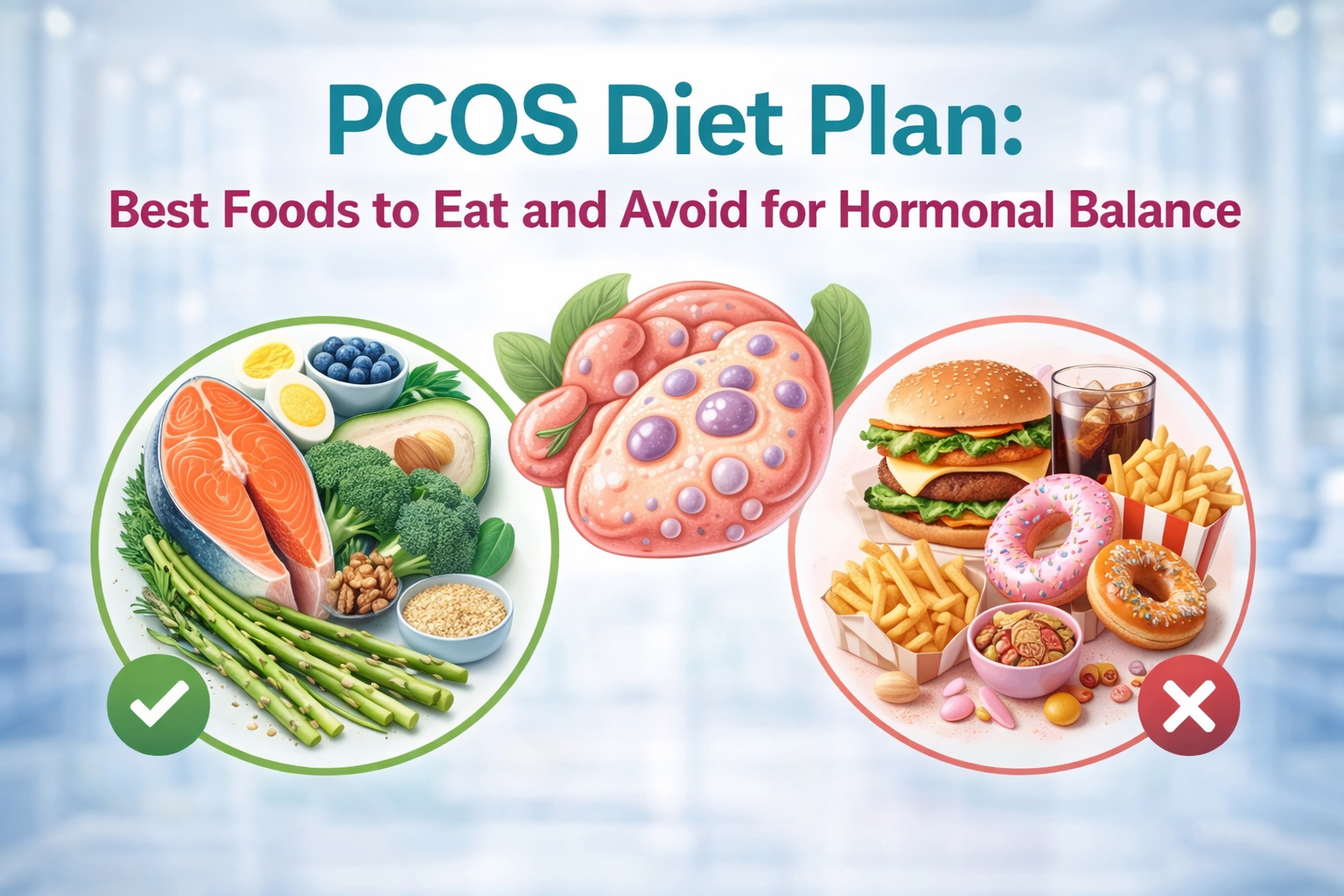
27 Mar PCOS Diet Plan: Best Foods to Eat and Avoid for Hormonal Balance
Table of Contents
Introduction
If you have been diagnosed with PCOS, you have probably been told that diet matters. But knowing what to eat — and what to avoid — can feel overwhelmingly confusing, especially when you are already dealing with irregular periods, hormonal imbalance, and fertility concerns.
The good news is that a well-structured PCOS diet plan does not have to be restrictive or complicated. Small, consistent changes to what you eat can meaningfully reduce insulin resistance, lower androgen levels, support regular ovulation, and improve your chances of conception.
At Fertibless Clinic in Delhi, Dr. Shipra Gupta works with every PCOS patient on both the medical and lifestyle dimensions of their care — because food is not a replacement for treatment, but it is a powerful part of it.
Why Does Diet Matter So Much in PCOS?
PCOS is fundamentally a hormonal and metabolic condition. According to Johns Hopkins Medicine, up to 70–75% of women with PCOS have insulin resistance — meaning their cells do not respond properly to insulin. This causes the body to produce more insulin, which in turn stimulates the ovaries to produce excess androgens (male hormones), disrupting ovulation.
The right PCOS diet plan targets this root cycle — stabilizing blood sugar, reducing inflammation, and supporting hormonal regulation — which together create a more favorable environment for ovulation and fertility.
Quick Answer: A PCOS diet plan works by targeting insulin resistance and inflammation — the two key drivers of PCOS hormonal imbalance. Low-glycaemic foods, lean protein, healthy fats, and anti-inflammatory nutrients help regulate insulin levels, support ovulation, and improve fertility outcomes.
Best Foods to Eat with PCOS
Low-Glycaemic Index (GI) Carbohydrates These release glucose slowly into the bloodstream, preventing insulin spikes. In an Indian context, excellent low-GI carbohydrate choices include:
- Brown rice, millets (jowar, bajra, ragi)
- Oats and daliya (broken wheat)
- Whole wheat roti instead of maida
- Lentils, chickpeas, rajma, and moong dal
- Sweet potato
Lean Protein Protein slows digestion and blunts blood sugar rises after meals. Good choices include:
- Eggs, paneer (in moderation), low-fat dahi (yoghurt)
- Chicken, fish (especially oily fish like salmon or rohu for omega-3s)
- Tofu, soya chunks, legumes
Healthy Fats Anti-inflammatory fats support hormonal production and reduce systemic inflammation:
- Flaxseeds and chia seeds (excellent for PCOS — rich in omega-3s and phytoestrogens)
- Nuts — almonds, walnuts, in moderate quantities
- Ghee in small amounts, olive oil, avocado
Non-Starchy Vegetables Eat generously — they are high in fibre, antioxidants, and micronutrients:
- Spinach, methi (fenugreek), broccoli, capsicum, cucumber, zucchini, bottle gourd
Anti-Inflammatory Herbs and Spices
- Turmeric (haldi) — a powerful anti-inflammatory, backed by research
- Cinnamon (dalchini) — shown in studies to improve insulin sensitivity in PCOS
- Fenugreek seeds (methi dana) — traditionally used and increasingly supported by evidence for blood sugar regulation
Foods to Avoid with PCOS
These foods worsen insulin resistance, increase inflammation, and disrupt hormonal balance:
| Avoid | Why |
|---|---|
| Refined carbohydrates (maida, white bread, white rice) | Spike blood sugar and insulin rapidly |
| Sugary drinks, packaged juices, cold drinks | Directly worsen insulin resistance |
| Deep-fried and processed foods | Promote inflammation |
| High-sugar sweets, mithai, packaged snacks | Elevate androgens via insulin spike |
| Trans fats (vanaspati, margarine) | Increase systemic inflammation |
| Excess dairy (for some women) | May elevate IGF-1 and androgens in sensitive individuals |
Simple Indian PCOS Meal Framework
You do not need an elaborate plan. A simple, balanced plate looks like this:
- Breakfast: Vegetable oats upma or moong dal chilla with mint chutney
- Lunch: 2 whole wheat rotis + dal + sabzi + salad
- Snack: A handful of mixed nuts + a small fruit (apple or pear)
- Dinner: Brown rice or millet + grilled paneer or fish + stir-fried vegetables
Aim for 3 balanced meals and 1–2 small snacks. Avoid long gaps between meals, which can worsen insulin swings.
Dr. Shipra Gupta, Fertibless Clinic: “At Fertibless, we see women transform their PCOS symptoms through consistent dietary changes — regular periods return, ovulation resumes, and fertility improves — even before any medication is started. A PCOS diet plan is not a short-term fix; it is a long-term investment in your hormonal health.”
Helpful Supplements to Discuss with Your Doctor
Research supports certain supplements as adjuncts to a PCOS-friendly diet:
- Myo-inositol — shown to improve insulin sensitivity and ovulation in PCOS
- Vitamin D — deficiency is common in PCOS and linked to worsened insulin resistance
- Omega-3 fatty acids — reduce inflammation and improve menstrual regularity
- N-acetylcysteine (NAC) — supports insulin regulation and may improve fertility
Always consult your doctor before starting supplements — they work best alongside, not instead of, dietary and medical management.
Our detailed guide on lifestyle factors for boosting fertility covers how diet, exercise, and stress management work together as a complete approach for PCOS and fertility.
Conclusion
A thoughtful PCOS diet plan is one of the most empowering steps you can take toward hormonal balance, regular cycles, and improved fertility. It does not have to be extreme — it simply has to be consistent, balanced, and tailored to your body.
Combined with the right medical guidance, dietary changes can make a meaningful and lasting difference to your PCOS journey.
If you have PCOS and are concerned about your fertility, consult Dr. Shipra Gupta at Fertibless Clinic for a complete fertility evaluation and a personalized treatment plan that includes both medical and lifestyle guidance.
📞 +91 92899 36221 | 🌐 www.fertibless.com
Frequently Asked Questions
Should I cut all carbs if I have PCOS?
No. Cutting all carbohydrates is not necessary or sustainable. The goal is to replace high-GI refined carbohydrates with low-GI whole carbohydrates — such as millets, whole grains, and legumes. These provide essential fibre and energy while stabilizing insulin.
Is intermittent fasting good for PCOS?
Intermittent fasting may work for some women, but it can disrupt hormonal cycles and worsen blood sugar control in others with PCOS. Johns Hopkins Medicine advises caution. A regular meal schedule with balanced meals is a safer starting point for most.
Can diet alone treat PCOS and restore fertility?
Diet is a powerful tool for managing PCOS symptoms and improving the hormonal environment for conception — but for many women, medical intervention is also needed. Our blog on PCOS and fertility explains the full range of treatment options, from ovulation induction to IUI and IVF, that may be recommended alongside lifestyle changes.
How long does it take for dietary changes to improve PCOS symptoms?
Most women begin noticing improvements in energy, mood, and cycle regularity within 8–12 weeks of consistent dietary changes — particularly when combined with regular exercise and stress management.

Dr. Shipra Gupta is a renowned obstetrician, gynaecologist, and infertility specialist, boasting over 17 years of invaluable clinical, teaching, and research experience. She has successfully performed more than 1200 cycles of IUI, IVF, natural cycle IVF, donor egg, and FET cycles. Dr. Gupta specializes in managing complex cases involving Advanced Maternal Age, PCO, Poor Ovarian Reserve, endometriosis, and unexplained infertility. Her expertise extends to treating recurrent IVF failures and male infertility.