
19 Mar What Is Micro-TESE? A Complete Guide for Men with Severe Infertility
Table of Contents
Introduction
A diagnosis of azoospermia — no sperm in the ejaculate — can feel like the end of the road for a man hoping to become a biological father. But in many cases, sperm may still be present inside the testicular tissue, even when it cannot be found in semen.
Micro-TESE (Microsurgical Testicular Sperm Extraction) is an advanced surgical procedure designed to find and retrieve that sperm — with the greatest precision and the least possible impact on testicular health.
At Fertibless Clinic in Delhi, Micro-TESE is offered as part of a comprehensive male infertility treatment pathway, guided by Dr. Shipra Gupta’s expertise in complex fertility cases.
What Is Micro-TESE?
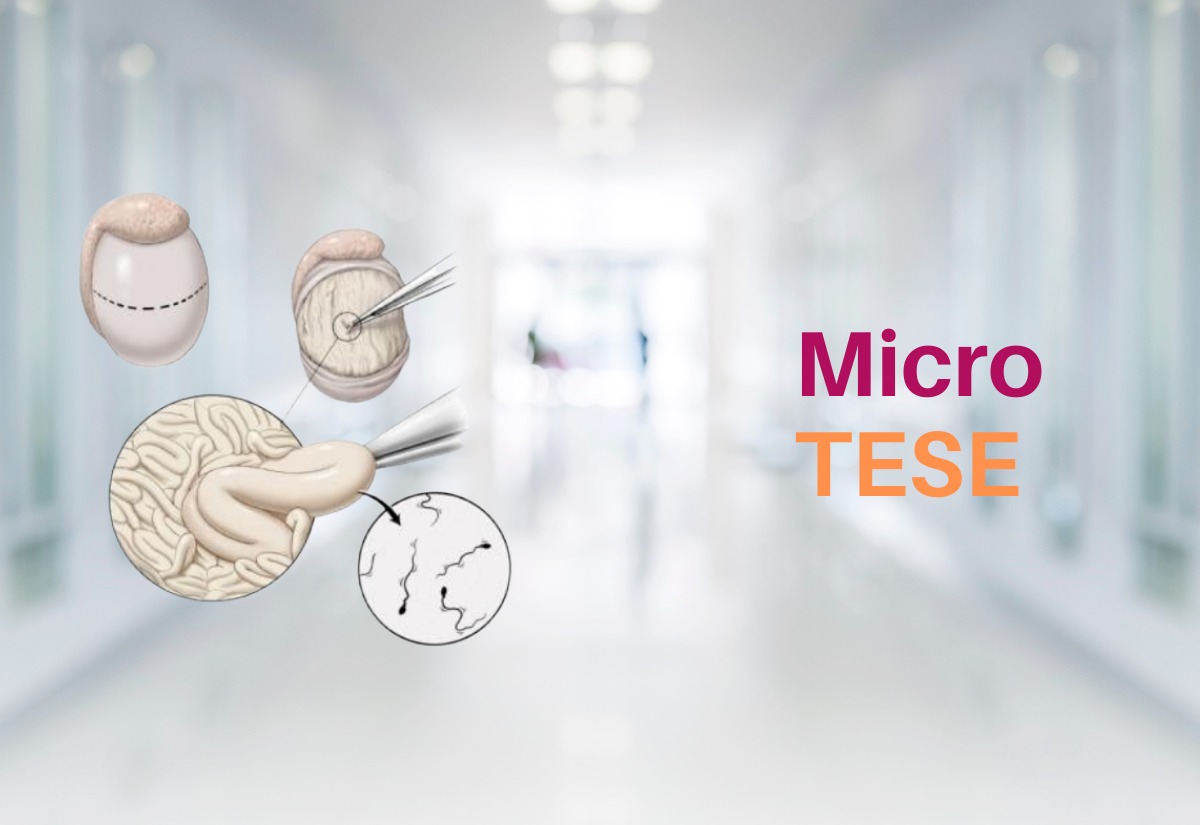
Micro-TESE (Microsurgical Testicular Sperm Extraction) is a surgical procedure in which a high-powered operating microscope is used to identify and extract small amounts of sperm-producing tissue from the testes. It is primarily used for men with non-obstructive azoospermia — where the testicles are producing little or no sperm due to a production problem, rather than a blockage.
Quick Answer: Micro-TESE is a microsurgical procedure that uses a powerful operating microscope to identify sperm-producing tubules inside the testes and retrieve sperm directly from the testicular tissue — even in men with very low or absent sperm production.
Who Needs Micro-TESE?
Micro-TESE is recommended for men with:
- Non-obstructive azoospermia (NOA) — no sperm in ejaculate due to testicular failure or impaired sperm production
- Failed conventional TESA — standard sperm aspiration has not retrieved sperm
- Genetic conditions affecting sperm production — such as Klinefelter syndrome, Y chromosome microdeletions
- Post-chemotherapy or radiation azoospermia
- Severely impaired sperm production even when sperm are present in very small numbers
If a semen analysis has returned with no sperm, the next step is a thorough male fertility evaluation including hormonal tests, genetic screening, and testicular biopsy consultation.
Micro-TESE vs Standard TESA: Key Differences
| Micro-TESE | Standard TESA | |
|---|---|---|
| Technique | Microsurgical under operating microscope | Needle aspiration |
| Tissue removed | Minimal, targeted | Less precise |
| Sperm retrieval rate (NOA) | 40% – 60% | 15% – 20% |
| Testicular damage | Minimal | Slightly higher |
| Best for | Non-obstructive azoospermia | Obstructive azoospermia |
The surgical precision of Micro-TESE means that sperm-producing tubules — which appear slightly larger and more opaque under the microscope — can be specifically targeted, dramatically improving the chance of finding viable sperm.
The Micro-TESE Procedure: What to Expect
Before the procedure: A full hormonal and genetic workup is performed to understand the likely cause of azoospermia and predict sperm retrieval success. This includes FSH, LH, testosterone, karyotype, and Y chromosome microdeletion analysis.
On the day: Micro-TESE is performed under general anesthesia. A single small incision is made in the scrotum, and the testes are examined under the operating microscope. Tissue samples from areas showing the highest likelihood of active sperm production are carefully extracted.
In the embryology lab: Retrieved tissue is immediately processed by an embryologist who searches for viable sperm. Any sperm found can be used fresh for ICSI (Intracytoplasmic Sperm Injection) in an IVF cycle, or frozen for future use.
Recovery: Most men recover fully within 1–2 weeks. The procedure causes minimal scarring and, when performed by an experienced surgeon, has very low risk of long-term testicular damage.
Dr. Shipra Gupta, Fertibless Clinic: “For men who have been told they have no sperm, Micro-TESE is often the procedure that changes everything. The sperm retrieval rate with microsurgical technique is significantly higher than conventional approaches — and for couples facing azoospermia, that difference is everything.”
Conclusion
Micro-TESE represents one of the most significant advances in male fertility treatment. For men with azoospermia, it transforms a seemingly impossible situation into a genuine chance of biological fatherhood.
If your semen analysis has shown no sperm, consult Dr. Shipra Gupta at Fertibless Clinic for a comprehensive male fertility evaluation and an honest discussion about whether Micro-TESE is right for you.
📞 +91 92899 36221 | 🌐 www.fertibless.com
Frequently Asked Questions
What happens if no sperm is found during Micro-TESE?
Unfortunately, even with Micro-TESE, sperm retrieval is not guaranteed — particularly in cases of severe testicular failure. If no sperm is retrieved, couples may explore donor sperm as an alternative path. Our blog on what to do when fertility treatments don’t work addresses these conversations honestly and compassionately.
Is Micro-TESE painful?
The procedure is performed under general anesthesia, so there is no pain during surgery. Mild scrotal discomfort for 5–7 days after the procedure is normal and managed with pain relief.
Can frozen Micro-TESE sperm be used for IVF?
Yes. Sperm retrieved and frozen through Micro-TESE can be used in future IVF-ICSI cycles, giving couples the flexibility to plan the IVF cycle independently of the sperm retrieval procedure.

Dr. Shipra Gupta is a renowned obstetrician, gynaecologist, and infertility specialist, boasting over 17 years of invaluable clinical, teaching, and research experience. She has successfully performed more than 1200 cycles of IUI, IVF, natural cycle IVF, donor egg, and FET cycles. Dr. Gupta specializes in managing complex cases involving Advanced Maternal Age, PCO, Poor Ovarian Reserve, endometriosis, and unexplained infertility. Her expertise extends to treating recurrent IVF failures and male infertility.