Frequently Asked Questions
What is laparoscopy?
Laparoscopy is a type of surgery that allows doctors to view the organs inside the abdomen through small incisions, using a camera called a laparoscope.
What conditions can be diagnosed or treated with laparoscopy?
Laparoscopy is often used to diagnose or treat conditions such as endometriosis, ovarian cysts, pelvic inflammatory disease, fibroids, and certain cancers. It’s also used for procedures like gallbladder removal, appendectomy, and hernia repair.
How long does it take to recover from laparoscopic surgery?
Recovery from laparoscopy is typically faster than traditional open surgery. Most patients can return to normal activities within a few days to a couple of days, depending on the procedure.
Is laparoscopy painful?
Laparoscopy is less painful than open surgery, but there may be some discomfort, particularly in the shoulders and abdomen, due to the gas used to inflate the abdomen during surgery.
How long does a laparoscopy procedure take?
The duration depends on the complexity of the procedure. A simple diagnostic laparoscopy may take 30 minutes to an hour, while more complex surgeries can take longer.
What are the risks of laparoscopic surgery?
While generally safe, risks include infection, bleeding, and damage to organs, or complications from anesthesia. There’s also a small risk that the surgery may need to be converted to an open procedure.
Do I need to stay overnight in the hospital after laparoscopy?
Many laparoscopic procedures are outpatient, meaning you can go home the same day. However, more complex surgeries may require a short hospital stay.
Can laparoscopy be used to treat infertility?
Yes, laparoscopy can be used to diagnose and sometimes treat conditions like blocked fallopian tubes or endometriosis that may be causing infertility.
What is laparoscopy, and why is it used for infertility?
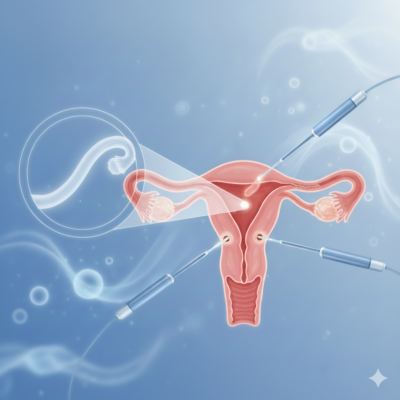
Laparoscopy is a minimally invasive procedure where a small camera (laparoscope) is inserted through small incisions to visualize the pelvic organs. It is used to diagnose and treat conditions like endometriosis, pelvic adhesions, fibroids, or blocked fallopian tubes—conditions that can affect fertility but might not show up on other tests like ultrasounds or HSGs (hysterosalpingograms).
Who should consider laparoscopy for infertility?
Laparoscopy is done for patients who have unexplained infertility, recurring miscarriages, or suspected endometriosis, blocked tubes, or pelvic adhesions. It’s especially helpful for women whose fertility has not improved with other treatments, like medication or IUI (intrauterine insemination).
What can laparoscopy detect that other tests might miss?
Laparoscopy provides a direct view of the reproductive organs, which detects issues like mild endometriosis, adhesions, or ovarian cysts that may not show up on an ultrasound. It also allows to correct the tissue right away by removing or correcting it during the same procedure.
Can laparoscopy improve my chances of pregnancy?
According to Dr. Gupta, in some cases, laparoscopy can significantly improve a woman’s chances of pregnancy. For example, removing endometriosis tissue or opening blocked tubes can enhance fertility naturally, or it may prepare the body for future treatments like IVF.
What is the recovery time after laparoscopy?
The recovery from laparoscopy usually takes about one to two weeks for most patients. The small incisions heal relatively quickly, and most women can return to light activities within a few days, with complete recovery in a couple of weeks.
Are there any risks with laparoscopy?
Laparoscopy is a safe procedure but, like any surgery, it carries minor risks such as infection, bleeding, or damage to nearby organs. These risks are rare, and she would ensure all precautions are taken to minimize them.
What happens if the problem is found during laparoscopy?
If a fertility issue is found during laparoscopy—such as endometriosis, fibroids, or blocked tubes—it can be immediately treated during the procedure. This could involve removing endometriosis tissue, cutting adhesions, or even unblocking fallopian tubes.
Dr. Shipra Gupta would emphasize that laparoscopy is a highly useful tool in both diagnosing and treating the causes of infertility, offering her patients clarity and potential improvement in their fertility journey.