
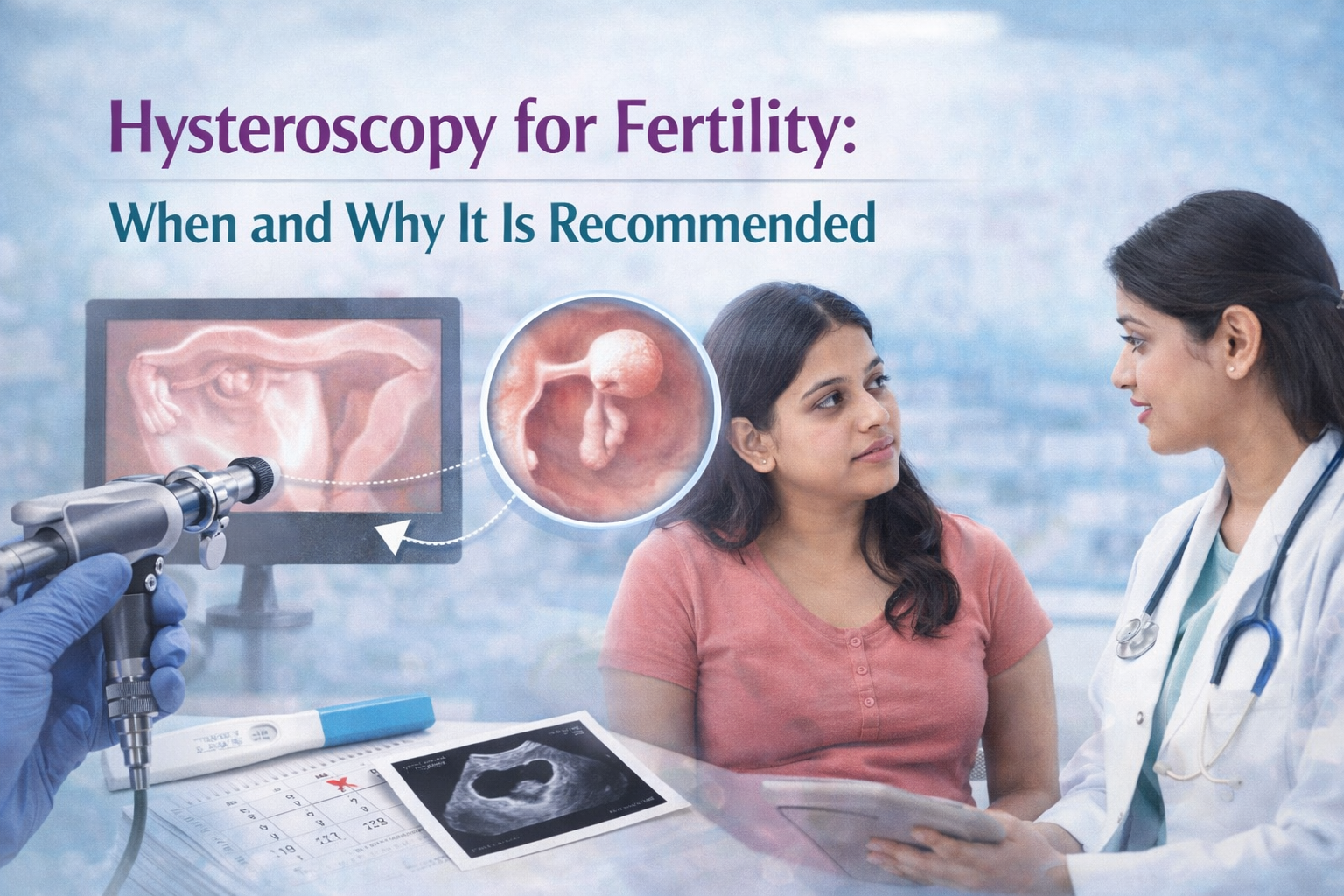
11 Mar Hysteroscopy for Fertility: When and Why It Is Recommended
Table of Contents
Introduction
Many couples who struggle to conceive — or who have experienced recurrent IVF failures — may have a hidden issue inside the uterine cavity that standard scans simply cannot detect. Hysteroscopy is the gold standard procedure for seeing inside the uterus directly, diagnosing conditions that might be silently preventing implantation, and treating them in the same sitting.
At Fertibless Clinic in Delhi, hysteroscopy is an important diagnostic and treatment tool in Dr. Shipra Gupta’s fertility care protocol — particularly for women with unexplained infertility, recurrent miscarriage, or failed IVF cycles.
What Is Hysteroscopy?
Hysteroscopy is a minimally invasive procedure in which a thin, lighted telescope (hysteroscope) is gently inserted through the cervix into the uterus. This allows the doctor to directly examine the uterine cavity, identify abnormalities, and correct them — without any external incisions.
Quick Answer: Hysteroscopy is a keyhole procedure that allows a fertility specialist to look inside the uterus, diagnose structural problems like polyps, fibroids, and adhesions, and treat them in the same procedure — often improving the chances of implantation and a successful pregnancy.
When Is Hysteroscopy Recommended for Fertility?
Dr. Shipra Gupta may recommend hysteroscopy for fertility when:
- Recurrent IVF failure — especially if embryo quality is good but implantation keeps failing
- Recurrent miscarriage — to check for structural or anatomical causes
- Abnormal uterine bleeding — irregular, heavy, or intermenstrual bleeding
- Suspected uterine polyps or fibroids — identified on ultrasound but needing confirmation
- Intrauterine adhesions (Asherman’s syndrome) — scar tissue inside the uterus
- Uterine septum — a wall of tissue dividing the uterine cavity, which can impair implantation
- Before starting IVF — as a thorough baseline check of uterine health
Understanding the full picture of your uterine health is a key part of any fertility evaluation.
What Conditions Can Hysteroscopy Diagnose and Treat?
| Condition | Effect on Fertility | Hysteroscopic Treatment |
| Endometrial polyps | Interfere with implantation | Polypectomy (removal) |
| Submucosal fibroids | Distort uterine cavity | Myomectomy |
| Intrauterine adhesions | Reduce uterine space and receptivity | Adhesiolysis |
| Uterine septum | Impairs embryo implantation | Septum resection |
| Chronic endometritis | Impairs lining receptivity | Identified and treated |
Research published on NIH PubMed confirms that treating uterine abnormalities identified by hysteroscopy before IVF significantly improves implantation rates.
What to Expect During the Procedure
Hysteroscopy is typically performed as a day procedure, under light sedation or local anesthesia. Here is what happens:
- You will be positioned for a gynecological examination
- The hysteroscope is gently introduced through the cervix into the uterus
- A small amount of fluid distends the uterine cavity for clear visualization
- The entire cavity is examined for abnormalities
- If any issues are found, they are corrected immediately using fine surgical instruments passed through the hysteroscope
- The procedure typically takes 15–45 minutes
- Recovery is quick — most patients return home the same day
Most women experience mild cramping and light spotting for 1–2 days after the procedure.
Hysteroscopy vs Laparoscopy: What Is the Difference?
These two procedures are often confused — but they examine different areas:
- Hysteroscopy examines the inside of the uterus
- Laparoscopy examines the outside of the uterus, the ovaries, fallopian tubes, and pelvic cavity
In many fertility investigations, both procedures are performed together to provide a complete picture of the reproductive system. In fact, many causes of infertility — such as endometriosis, fibroid location, and tubal disease — can only be definitively confirmed through these procedures.
Dr. Shipra Gupta, Fertibless Clinic: “At Fertibless, we believe in not leaving stones unturned. Hysteroscopy is often the procedure that reveals the answer couples have been searching for — a small polyp, a uterine septum, a subtle adhesion — conditions that are invisible on routine scans but completely treatable.”
Conclusion
Hysteroscopy for fertility is a safe, precise, and often transformative procedure. It answers questions that no ultrasound can, and corrects problems that may have been silently standing between you and a successful pregnancy.
If you have been advised to consider hysteroscopy — or if you are experiencing unexplained infertility or recurrent pregnancy loss — consult Dr. Shipra Gupta at Fertibless Clinic for a thorough and personalized assessment.
📞 +91 92899 36221 | 🌐 www.fertibless.com
Frequently Asked Questions
Is hysteroscopy painful?
Most women experience mild discomfort during the procedure, similar to period cramping. It is typically performed under sedation or local anesthesia, making the experience comfortable and well-tolerated.
How soon after hysteroscopy can I start IVF?
In most cases, IVF can begin as early as the next menstrual cycle following hysteroscopy — once the uterus has healed. Your doctor will advise on the specific timing based on what was found and treated.
Can hysteroscopy improve IVF success rates?
Yes — particularly when a uterine abnormality is identified and treated. Studies show meaningful improvements in implantation rates after hysteroscopic correction of polyps, adhesions, and septa. If your IVF cycles have repeatedly failed, our blog on recurrent IVF failure explains the full investigation pathway.

Dr. Shipra Gupta is a renowned obstetrician, gynaecologist, and infertility specialist, boasting over 17 years of invaluable clinical, teaching, and research experience. She has successfully performed more than 1200 cycles of IUI, IVF, natural cycle IVF, donor egg, and FET cycles. Dr. Gupta specializes in managing complex cases involving Advanced Maternal Age, PCO, Poor Ovarian Reserve, endometriosis, and unexplained infertility. Her expertise extends to treating recurrent IVF failures and male infertility.