
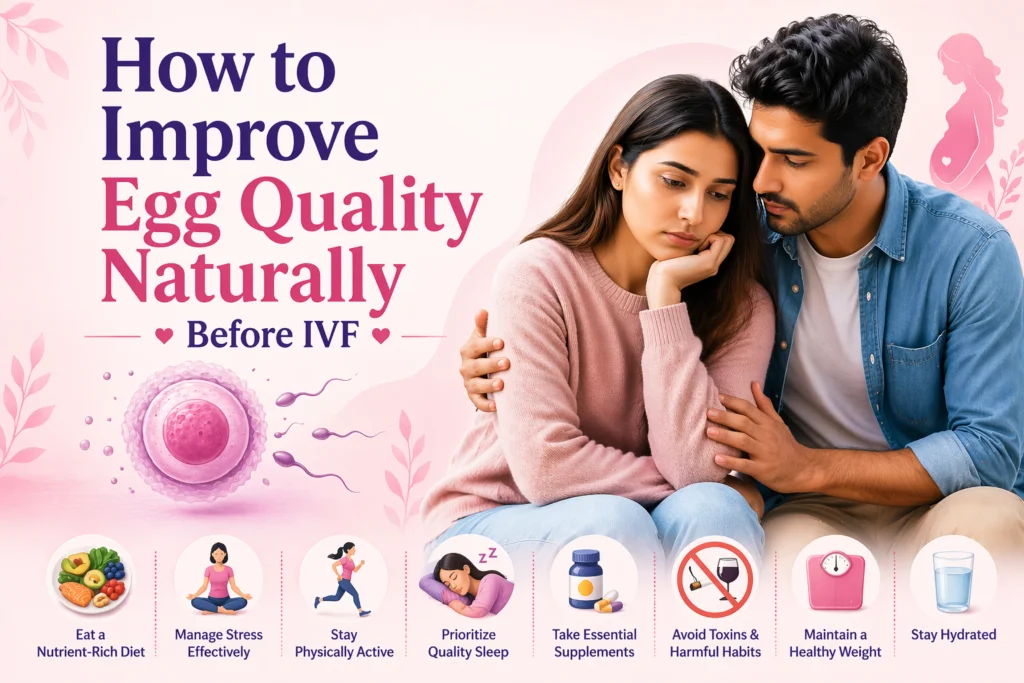
07 Apr How to Improve Egg Quality Naturally Before IVF
Table of Contents
How to improve egg quality for IVF is the single most searched question among women preparing for a fertility treatment cycle and for good reason. Egg quality, far more than egg quantity, determines whether fertilisation succeeds, whether an embryo develops to blastocyst stage, and ultimately whether a healthy pregnancy is achieved.
The encouraging truth is that the three to four months before egg retrieval represent a crucial window of opportunity. During this period, the follicles housing your eggs are actively developing — and the environment you create in your body can meaningfully influence the quality of the eggs retrieved. Understanding exactly how to improve egg quality for IVF during this window gives you a genuine advantage going into your cycle.
At Fertibless Clinic in Delhi, Dr. Shipra Gupta works with every patient to optimise this pre-IVF window through a personalised combination of medical assessment, targeted supplementation, and evidence-backed lifestyle strategies.
Why Learning How to Improve Egg Quality for IVF Matters
A common misconception is that more eggs always means a better IVF outcome. In reality, a single high-quality egg capable of developing into a healthy blastocyst has far greater value than several poor-quality eggs that arrest before reaching the transfer stage.
Egg quality refers primarily to chromosomal normality — known as euploid status. Eggs with chromosomal abnormalities (aneuploid) are the leading cause of failed fertilisation, poor embryo development, implantation failure, and miscarriage — including in IVF cycles. This is why understanding how to improve egg quality for IVF is one of the most empowering things a woman can do in her preparation phase.
Factors that influence egg quality include age (the most powerful determinant), ovarian reserve, follicular blood flow, oxidative stress, hormonal balance, and — importantly — lifestyle choices that are within your control.
Nutrition Strategies That May Help
Adopt a Mediterranean-Style Diet
Diet is one of the most accessible and impactful ways to begin working on how to improve egg quality for IVF, and research consistently supports the Mediterranean approach. Studies show that a Mediterranean diet — rich in vegetables, legumes, whole grains, olive oil, and oily fish — is associated with better IVF outcomes. This eating pattern is anti-inflammatory, antioxidant-rich, and supports healthy hormonal balance.
- Leafy greens (spinach, kale, broccoli) — Rich in folate, which is vital for DNA synthesis and healthy cell division in developing eggs.
- Colourful vegetables and berries — High in antioxidants that protect egg cells from oxidative damage during the stimulation phase.
- Fatty fish (salmon, sardines, mackerel) — An excellent source of omega-3 fatty acids that support follicular membrane health and reduce pelvic inflammation.
- Whole grains and legumes — Regulate blood sugar and insulin levels, supporting hormonal balance — particularly important in women with PCOS.
- Nuts and seeds — Rich in vitamin E, zinc, and selenium, all of which are associated with healthier egg development.
Foods to Reduce or Avoid
- Refined sugar and ultra-processed foods — Drive systemic inflammation and insulin resistance, both of which impair follicular development.
- Trans fats — Directly linked to poorer IVF outcomes and disrupted ovulation in published research.
- Alcohol — Associated with reduced egg quality and lower clinical pregnancy rates in IVF cycles.
- High-mercury fish (swordfish, shark, king mackerel) — Mercury is directly toxic to reproductive cells and should be completely avoided.
Supplements That May Help Improve Egg Quality for IVF
Alongside diet and lifestyle, targeted supplementation is the most evidence-supported method for how to improve egg quality for IVF in the 90-day window before egg retrieval. Always consult Dr. Shipra Gupta before starting any supplement — dosing, timing, and suitability vary based on your individual health profile.
- CoQ10: Coenzyme Q10 (CoQ10) — The most widely studied supplement for egg quality. CoQ10 is critical for mitochondrial energy production within the egg. Research suggests it may improve egg quality and ovarian response, particularly in older women and poor responders. Doses studied range from 200–600 mg daily, ideally started 3 months before retrieval. It is among the most recommended supplements for women researching how to improve egg quality for IVF.
- Folic Acid: Folic Acid or Methylfolate — Essential for DNA replication and reducing the risk of chromosomal abnormalities in developing eggs. At least 400–800 mcg daily is recommended for all women trying to conceive.
- Vitamin D: Vitamin D — Receptors for vitamin D are present in ovarian tissue, and deficiency is associated with poorer IVF outcomes. Have your levels tested and supplement under specialist guidance.
- Omega-3: Omega-3 Fatty Acids — Support follicular membrane fluidity, reduce inflammation, and may improve the hormonal environment for egg development. Available in fish oil or algae-based supplements.
- Melatonin: Melatonin — A powerful antioxidant naturally concentrated in follicular fluid. Research suggests melatonin may protect eggs from oxidative stress during stimulation. Typically 3 mg taken at night.
- DHEA: DHEA — Used under specialist supervision in poor ovarian responders. Some evidence suggests it may improve both the number and quality of eggs retrieved in carefully selected patients.
Lifestyle Changes With the Greatest Impact
Stop Smoking Immediately
Smoking is directly toxic to eggs — accelerating follicular depletion, lowering AMH levels, and significantly reducing IVF success rates. There is no safe level of smoking when working on how to improve egg quality for IVF. Stopping immediately and as far in advance of your cycle as possible is the single most impactful lifestyle change a woman can make.
Achieve a Healthy Body Weight
Both underweight and overweight status disrupt the hormonal balance required for healthy follicular development. A BMI between 19 and 25 is generally associated with the best reproductive outcomes. Even modest weight normalisation in the 3 months before egg retrieval can meaningfully improve stimulation response and egg quality.
Reduce Stress
Chronic stress elevates cortisol, which suppresses the GnRH pulses needed for normal follicular development. Yoga, mindfulness meditation, walking, and fertility counselling all support the neuro-endocrine balance that underpins healthy egg maturation — and should be considered a genuine part of the plan for how to improve egg quality for IVF, not just a luxury.
Prioritise Quality Sleep
Deep sleep cycles support growth hormone secretion and melatonin production — both of which play direct roles in follicular health. Aim for 7–9 hours of uninterrupted sleep throughout the IVF preparation phase, with consistent sleep and wake times to support circadian hormonal rhythm.
Moderate Exercise — Not Extreme
Moderate aerobic activity (30 minutes, 4–5 times per week) supports circulation, stress reduction, and healthy weight maintenance. However, very high-intensity exercise during the stimulation phase may suppress ovarian function — keep activity enjoyable and moderate once your cycle has started.
Reduce Environmental Toxin Exposure
Endocrine-disrupting chemicals (EDCs) found in certain plastics, pesticides, and personal care products can interfere with hormonal signalling and follicular development. Reducing your toxic load is a frequently overlooked but genuinely impactful step in how to improve egg quality for IVF:
- Switch to glass or stainless steel food containers — Avoid heating food in plastic, which can leach BPA and phthalates.
- Choose organic produce where possible — Particularly for the high-pesticide ‘Dirty Dozen’ crops.
- Use natural personal care products — Avoid phthalates, parabens, and synthetic fragrances in cosmetics and toiletries.
- Filter your drinking water — Reduces exposure to industrial contaminants and hormone-disrupting residues.
| Expert Insight — Dr. Shipra Gupta When patients ask me how to improve egg quality for IVF, I always start with the same answer: the three months before egg retrieval are your greatest opportunity — and the most underused one. Egg quality is not fixed. The mitochondrial environment within a follicle can be influenced by what you eat, what you take, how you sleep, and how much oxidative stress your body is carrying. I have seen women with very modest reserve achieve excellent blastocyst development after a committed pre-IVF optimisation phase. Small, consistent changes compound over 90 days into a genuinely different biological environment. — Dr. Shipra Gupta, Infertility Specialist, Fertibless Clinic, Delhi |
Your 3-Month Plan to Improve Egg Quality for IVF
Consistency over this 90-day window is the cornerstone of how to improve egg quality for IVF effectively. The follicle that will be retrieved in your IVF cycle has been developing for approximately 90 days before retrieval — meaning changes made today will influence the egg collected in your upcoming cycle.
- Month 1 — Foundation: Start CoQ10, folic acid, omega-3, and vitamin D. Begin dietary transition to Mediterranean-style eating. Quit smoking and alcohol completely. Establish a consistent sleep routine of 7–9 hours.
- Month 2 — Refinement: Consolidate dietary changes. Introduce daily stress management practice (yoga, meditation, or walking). Reduce environmental toxin exposure at home. Maintain consistent supplement use.
- Month 3 — Optimisation: Maintain all changes without interruption. Begin IVF stimulation as per your doctor’s protocol. Switch to moderate-only exercise once stimulation starts. Attend all monitoring appointments.
Reference: Bentov et al. (2013) — The Contribution of Mitochondrial Function to Reproductive Aging, Journal of Assisted Reproduction and Genetics | ASRM Guidelines — www.asrm.org | NIH — www.ncbi.nlm.nih.gov/pubmed
Frequently Asked Questions
What is the fastest way to improve egg quality for IVF?
There is no overnight solution, but the most impactful immediate steps for how to improve egg quality for IVF are: stopping smoking immediately, starting CoQ10 and folic acid, adopting a Mediterranean-style diet, and optimising your sleep — all begun at least 3 months before your planned egg retrieval date. Consistency over this 90-day window is what makes the difference.
How long does it take to improve egg quality before IVF?
The primary follicle retrieved in an IVF cycle has been developing for approximately 90 days. This means lifestyle and supplement changes made 3 months before egg retrieval have the most meaningful impact. This is why starting your pre-IVF optimisation plan as early as possible is strongly recommended.
Can egg quality be measured directly before retrieval?
Not before retrieval. Egg quality is assessed by the embryologist after collection, based on the egg’s morphological appearance, its ability to fertilise, and how the resulting embryo develops. Preimplantation Genetic Testing (PGT-A) on embryos provides the most definitive assessment of chromosomal health.
Does CoQ10 genuinely improve egg quality for IVF?
Several clinical studies support CoQ10’s role in improving mitochondrial function in eggs, particularly in older women and poor responders. Evidence is promising though not yet definitive. Most reproductive specialists consider it a low-risk, potentially beneficial addition to a pre-IVF supplement protocol. Discuss appropriate dosing with Dr. Shipra Gupta before starting.
Can chronic stress actually reduce egg quality?
Yes. Sustained elevation of cortisol — the primary stress hormone — can suppress the GnRH pulses responsible for normal follicular stimulation, and may impair follicular fluid quality. While occasional stress will not harm your eggs, chronic high-stress levels over months can affect how to improve egg quality for IVF outcomes. Integrating mindfulness, yoga, or counselling is genuinely recommended — not optional.
Should I take supplements without my doctor’s advice?
No. While many supplements discussed above are generally safe, incorrect dosing, interactions with fertility medications, or taking supplements not appropriate for your individual condition can cause harm. Always discuss your full supplement protocol with Dr. Shipra Gupta before your IVF cycle begins.

Dr. Shipra Gupta is a renowned obstetrician, gynaecologist, and infertility specialist, boasting over 17 years of invaluable clinical, teaching, and research experience. She has successfully performed more than 1200 cycles of IUI, IVF, natural cycle IVF, donor egg, and FET cycles. Dr. Gupta specializes in managing complex cases involving Advanced Maternal Age, PCO, Poor Ovarian Reserve, endometriosis, and unexplained infertility. Her expertise extends to treating recurrent IVF failures and male infertility.