
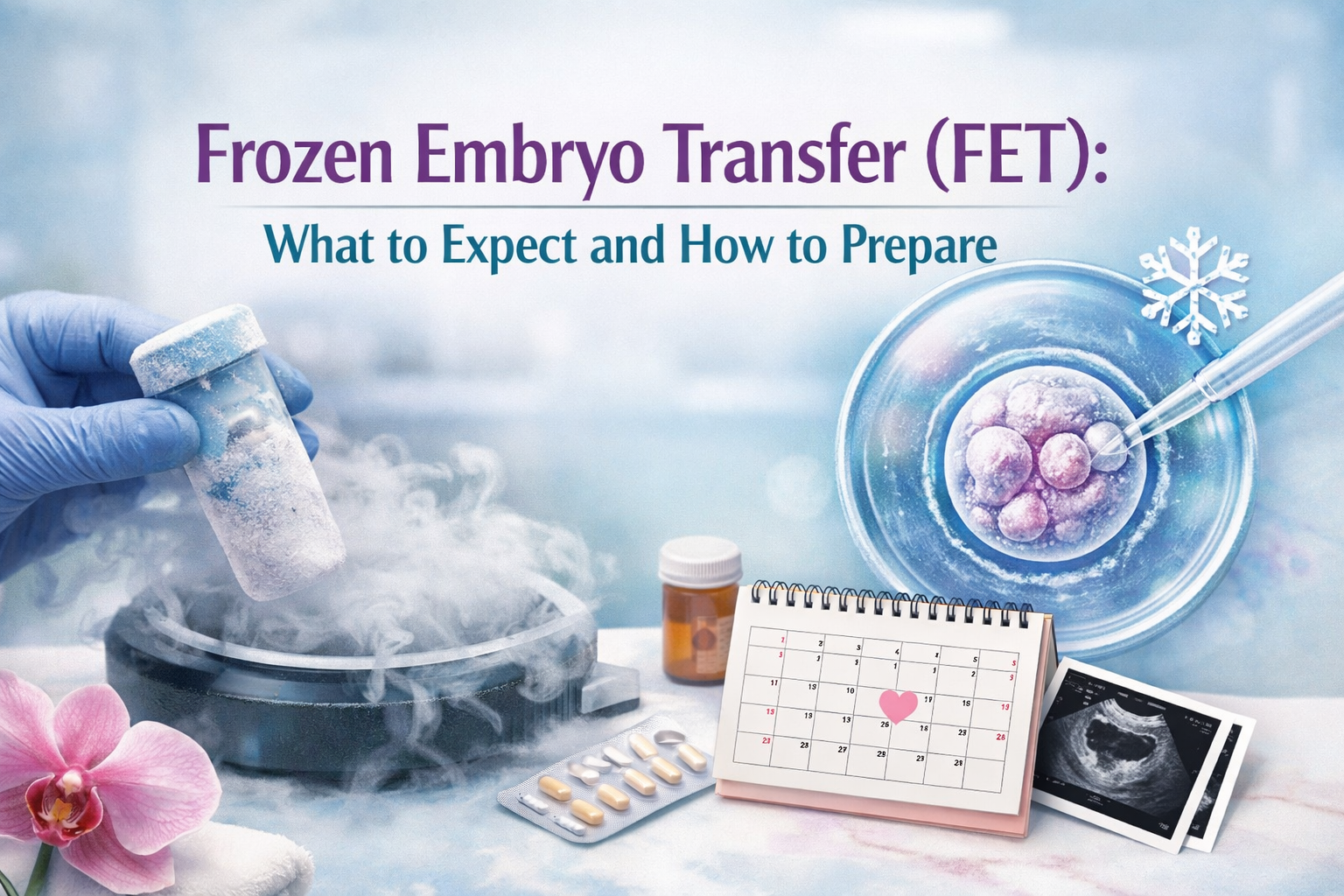
01 Mar Frozen Embryo Transfer (FET): What to Expect and How to Prepare
Table of Contents
After a successful IVF egg retrieval and fertilization, you may find yourself with more embryos than were transferred in your first cycle. Those extra embryos are frozen — carefully preserved — for future use. When the time comes to use them, the procedure is called a Frozen Embryo Transfer, or FET.
For many couples in Delhi, FET is not just a backup plan. It is a carefully chosen, evidence-backed path that often delivers equal or even better outcomes than a fresh embryo transfer — with less physical burden and more flexibility.
Here is everything you need to know about Frozen Embryo Transfer, explained simply and honestly by Dr. Shipra Gupta at Fertibless Clinic.
What Is Frozen Embryo Transfer?
Frozen Embryo Transfer (FET) is a procedure in which an embryo that was previously created through IVF, cryopreserved (frozen), and stored is thawed and transferred into the uterus during a prepared cycle.
Quick Answer: FET is the process of thawing a frozen embryo — created during a previous IVF cycle — and placing it into the uterus when the lining is optimally prepared for implantation. No egg retrieval is needed, making it simpler and less physically demanding than a full IVF cycle.
Modern vitrification technology (ultra-rapid freezing) means that over 95% of frozen embryos survive the thawing process with no compromise to their quality.
Who Needs a Frozen Embryo Transfer?
FET is recommended for couples who:
- Have surplus embryos remaining after a fresh IVF cycle
- Are expanding their family using previously stored embryos
- Underwent preimplantation genetic testing (PGT), which requires embryos to be frozen while awaiting results
- Were at risk of ovarian hyperstimulation syndrome (OHSS) after stimulation — FET eliminates this risk entirely
- Had a failed fresh transfer and wish to try with remaining frozen embryos
If you are new to the fertility journey and wondering about next steps, your first visit to Fertibless Clinic will help you understand all your options clearly.
The FET Process: Step by Step
Step 1 — Uterine Lining Preparation
The cycle begins with estrogen medication (oral, injection, or patch) to build up the uterine lining. Monitoring ultrasounds track lining thickness — ideally 7–8 mm or more.
Step 2 — Progesterone Support
Once the lining is ready, progesterone is introduced to prepare the uterus for implantation. The timing of progesterone must precisely match the developmental stage of the embryo being transferred.
Step 3 — Embryo Thawing
On the day of transfer, the embryo is carefully thawed in the embryology laboratory. An experienced embryologist confirms the embryo’s quality before the procedure.
Step 4 — The Transfer
Using a thin, flexible catheter — guided by ultrasound — the embryo is gently placed into the uterus. The procedure takes under 10 minutes, requires no anesthesia, and feels similar to a Pap smear.
Step 5 — Pregnancy Test
A blood HCG test is conducted approximately 10–14 days after transfer to confirm whether implantation has occurred.
FET vs Fresh Transfer: Which Has Better Success Rates?
This is one of the most common questions at Fertibless. Research published by Johns Hopkins Medicine confirms that pregnancy rates with frozen embryo transfers are comparable to, and in many cases higher than, fresh transfers — particularly in women with PCOS or elevated hormone levels after stimulation.
| Frozen Embryo Transfer | Fresh Embryo Transfer | |
| Uterine Readiness | Optimally prepared | May still be affected by stimulation hormones |
| OHSS Risk | None | Present |
| Flexibility | Transfer when body is ready | Fixed to stimulation cycle |
| Success Rate | 40–50%+ (under 35) | Comparable, slightly variable |
FET’s key advantage is timing — the uterus is prepared independently, without the physiological stress of a fresh stimulation cycle.
For a deeper understanding of how success rates vary with age, our blog on IVF success rates by age explains the full picture.
How to Prepare for a Frozen Embryo Transfer
Preparation matters. In the weeks leading up to your FET, Dr. Shipra Gupta recommends:
- Nutrition: Prioritize iron-rich, antioxidant-dense foods to support uterine health
- Avoid smoking and alcohol — both impair implantation
- Moderate exercise only — avoid intense physical activity during the stimulation phase
- Stress management: Yoga, meditation, and adequate sleep help regulate cortisol levels, which can influence implantation
- Take all prescribed medications on schedule — timing is critical in FET
Our comprehensive guide on lifestyle factors for boosting fertility covers these in full detail.
Dr. Shipra Gupta, Fertibless Clinic: “A Frozen Embryo Transfer gives us the opportunity to transfer the right embryo at the right time — when the body is truly ready. For many of our patients, FET becomes their moment of success after a challenging journey.”
Conclusion
Frozen Embryo Transfer is one of the most scientifically refined and patient-friendly steps in modern fertility care. It gives couples the gift of time, flexibility, and a second — or third — genuine opportunity at parenthood using embryos they have already worked hard to create.
If you have frozen embryos waiting, or are currently undergoing IVF and want to understand your full range of options, consult Dr. Shipra Gupta at Fertibless Clinic for a personalized plan.
📞 +91 92899 36221 | 🌐 www.fertibless.com
Frequently Asked Questions
Is FET painful?
No. The transfer procedure is quick and minimally uncomfortable — most women compare it to a routine cervical examination. No anesthesia is required.
How long does the FET process take from start to transfer?
Uterine preparation typically takes 2–3 weeks. The transfer itself takes under 10 minutes. You can resume normal activities the same day.
Can FET fail even with a good-quality embryo?
Yes, implantation is not guaranteed even with chromosomally normal, high-quality embryos. Factors such as uterine lining quality, immune responses, and embryo-endometrial synchrony all play a role. If FET is unsuccessful, it is important to review the protocol carefully before the next attempt.
How many FET attempts are recommended?
Most specialists advise 2–3 FET attempts before reassessing the protocol or exploring further investigations.

Dr. Shipra Gupta is a renowned obstetrician, gynaecologist, and infertility specialist, boasting over 17 years of invaluable clinical, teaching, and research experience. She has successfully performed more than 1200 cycles of IUI, IVF, natural cycle IVF, donor egg, and FET cycles. Dr. Gupta specializes in managing complex cases involving Advanced Maternal Age, PCO, Poor Ovarian Reserve, endometriosis, and unexplained infertility. Her expertise extends to treating recurrent IVF failures and male infertility.