
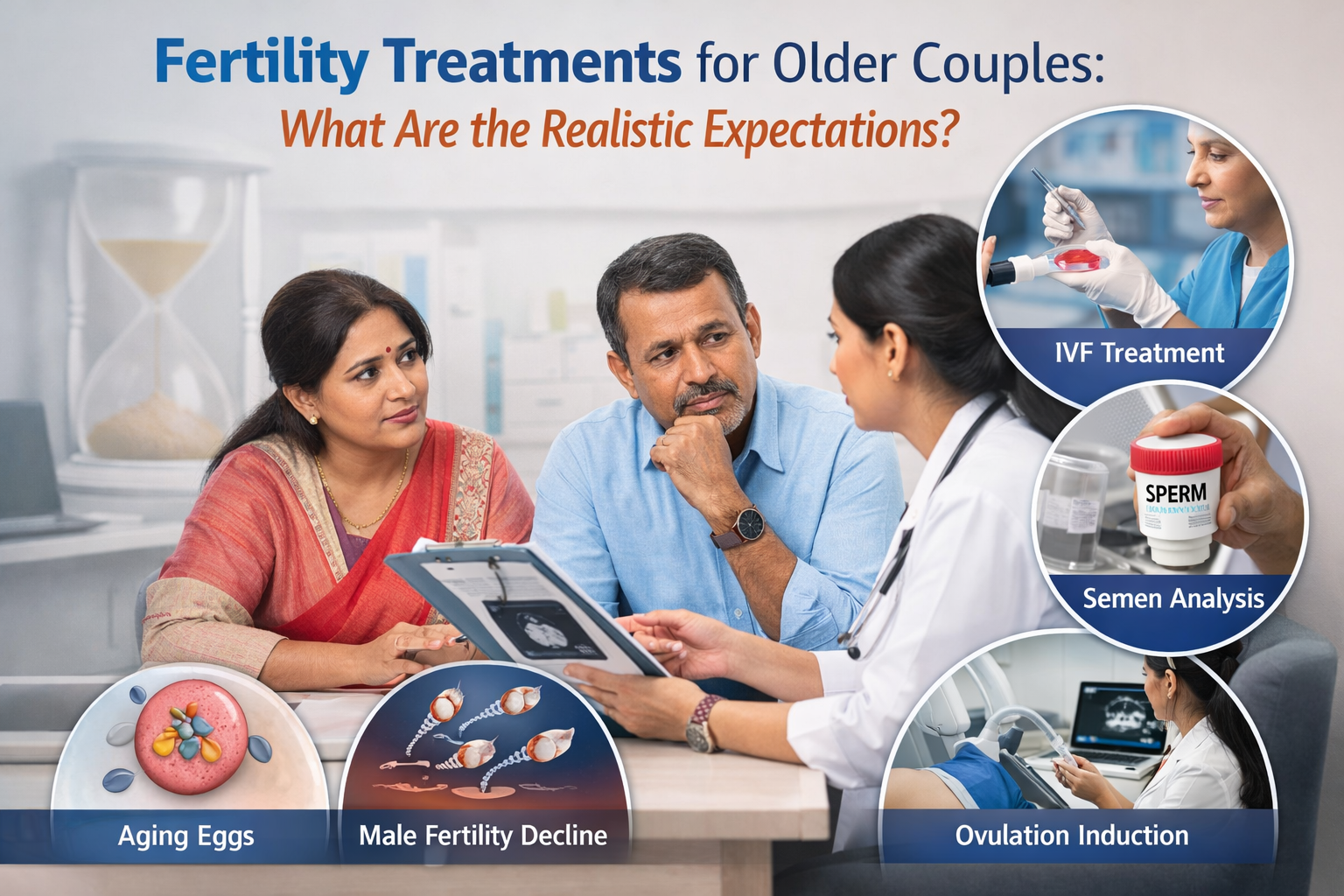
10 Jan Fertility Treatments for Older Couples: What Are the Realistic Expectations?
As more couples choose to start families later in life due to career goals, financial stability, or personal reasons, questions around age and fertility have become increasingly common. At a trusted Fertility Clinic in Delhi, one of the most frequent concerns we hear is: “Are we too late to try?”
The truth is, fertility treatments can still offer hope for older couples, but expectations must be realistic, informed, and medically guided. Age affects both Female Fertility and Male Fertility, and understanding these changes helps couples make confident, timely decisions.
How Age Affects Female Fertility
Female fertility naturally declines with age, especially after 35. This decline is linked to both the quantity and quality of eggs.
Key age-related changes include:
• Reduced ovarian reserve (lower egg count)
• Declining egg quality, increasing chromosomal abnormalities
• Higher risk of miscarriage
• Reduced implantation rates
• Increased chances of pregnancy complications
By the early 40s, natural conception becomes more challenging, but not impossible especially with early intervention and personalized fertility care.
Male Fertility and Age: Often Overlooked but Important
While men continue producing sperm throughout life, Male Fertility is not immune to aging. After 40–45 years, changes may include:
• Reduced sperm motility
• Increased DNA fragmentation
• Lower sperm morphology
• Higher risk of genetic mutations
In addition to age, Male Lifestyle factors such as smoking, alcohol intake, obesity, stress, and lack of sleep can further impact sperm quality. The good news? Many lifestyle-related factors are reversible with proper guidance.
Fertility Evaluation for Older Couples: The First Critical Step
At a specialized Fertility Clinic in Delhi, fertility assessment for older couples is more comprehensive and time-sensitive.
Common tests include:
• AMH and ovarian reserve testing (for women)
• Ultrasound and ovulation tracking
• Semen analysis and sperm DNA testing (for men)
• Hormonal profiling for both partners
• Uterine and tubal evaluation if required
This detailed evaluation helps doctors recommend the most effective treatment path without unnecessary delays.
Treatment Options for Older Couples
Ovulation Induction Treatment in Delhi
For women with irregular cycles or ovulatory issues, Ovulation Induction Treatment may be recommended. Medications help stimulate egg development and timed ovulation.
Best suited for:
• Women in late 30s with reasonable ovarian reserve
• Couples with mild fertility issues
• Early intervention cases
However, success rates decrease with advancing age, and limited cycles are usually advised before moving to advanced treatments.
Intrauterine Insemination (IUI)
IUI may be considered in select older couples but generally has lower success rates after 38–40 years, especially if ovarian reserve is low.
IVF and Advanced ART Options
IVF remains the most effective option for many older couples. However, realistic expectations are essential:
• Success rates depend on age, egg quality, and embryo health
• Multiple cycles may be required
• Donor egg IVF may be advised when egg quality is significantly compromised
Advanced lab techniques and personalized protocols significantly improve outcomes when performed at an experienced fertility center.
Emotional Health & Mindset: A Vital Part of Fertility Care
Fertility treatment at an older age can be emotionally demanding. Anxiety, fear of failure, and social pressure are common. Supportive counseling, clear communication, and compassionate care play a critical role in sustaining emotional well-being throughout the journey.
Organizations like the World Health Organization recognize infertility as a disease, reinforcing that seeking treatment is a medical necessity—not a personal shortcoming.
Setting Realistic Expectations: What Older Couples Should Know
• Fertility treatment is not instant; it may take time and multiple attempts
• Success rates are lower compared to younger couples—but not zero
• Early consultation improves outcomes significantly
• Lifestyle changes can positively impact both Male Fertility and Female Fertility
• Trusting an experienced fertility specialist matters more than ever
At clinics like Fertibless, treatment plans are designed with transparency, compassion, and individualized care—helping couples move forward with clarity and hope.
Final Thoughts
Age brings challenges, but it also brings emotional maturity, stability, and resilience. With the right medical support, timely evaluation, and realistic expectations, many older couples successfully achieve parenthood.
If you are considering fertility treatment, do not delay seeking expert advice. The right guidance at the right time can make all the difference.
Frequently Asked Questions
Can women over 40 still conceive with fertility treatment?
Yes, conception is possible, but success rates are lower. IVF and donor egg options significantly improve chances depending on individual health factors.
Does male age affect fertility outcomes?
Absolutely. Male Fertility declines with age, especially sperm quality and DNA integrity, which can impact embryo development.
Is Ovulation Induction Treatment in Delhi effective for older women?
It can be effective in selected cases, especially in women with preserved ovarian reserve, but usually for limited cycles.
When should older couples consult a fertility specialist?
Women over 35 should consult after 6 months of trying; women over 40 should seek help immediately.
Can lifestyle changes really improve fertility at an older age?
Yes. Improving Male Lifestyle habits—diet, exercise, sleep, stress management, and quitting smoking—can positively impact fertility outcomes.

Dr. Shipra Gupta is a renowned obstetrician, gynaecologist, and infertility specialist, boasting over 17 years of invaluable clinical, teaching, and research experience. She has successfully performed more than 1200 cycles of IUI, IVF, natural cycle IVF, donor egg, and FET cycles. Dr. Gupta specializes in managing complex cases involving Advanced Maternal Age, PCO, Poor Ovarian Reserve, endometriosis, and unexplained infertility. Her expertise extends to treating recurrent IVF failures and male infertility.