Frequently Asked Questions
What is TESA, and how does it differ from TESE?
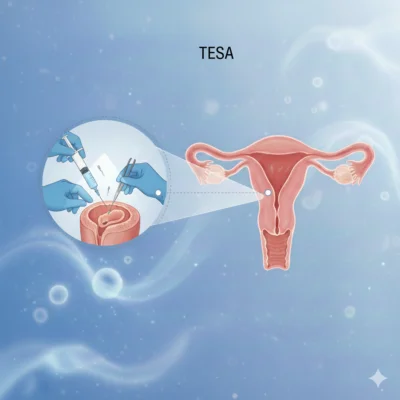
TESA (Testicular Sperm Aspiration) is a procedure where a small needle is used to extract sperm directly from the testicles. It’s typically quicker and less invasive. TESE (Testicular Sperm Extraction), on the other hand, involves making a small incision in the testicle to remove tissue, from which sperm is later collected. TESA is often preferred for simpler cases, while TESE is used when TESA doesn’t work or in more complex cases. Both are used to help men with sperm-related fertility issues.
Is TESA painful?
TESA is usually not very painful because it’s done under local anesthesia, so you won’t feel much during the procedure. Afterward, you might experience mild discomfort or soreness in the area for a day or two, similar to how you might feel after a small injection or minor procedure. Most patients find the pain to be manageable with over-the-counter pain relief.
How long does the procedure take?
The TESA procedure typically takes about 15 to 30 minutes. It’s relatively quick, and you can usually go home the same day once the anesthesia wears off.
What are the risks or complications associated with TESA?
The risks associated with TESA are generally low, but like any medical procedure, there can be some complications. These may include:
- Mild pain or discomfort: Common and usually temporary.
- Swelling or bruising at the site of the needle insertion.
- Infection: Rare, but possible, and usually preventable with proper care.
- Bleeding inside the testicle, though this is uncommon.
- Testicular damage: Extremely rare but possible if multiple attempts are made.
Dr. Shipra will give you aftercare instructions to minimize these risks.
How successful is TESA in retrieving viable sperm?
The success of TESA in retrieving viable sperm depends on the underlying condition causing infertility. In cases of obstructive azoospermia (where sperm production is normal but there’s a blockage), success rates are high, often around 90-100%. For non-obstructive azoospermia (where sperm production is low), success rates can vary widely, ranging from 30-50%. Your fertility specialist Dr. Shipra will give you a better idea based on your specific situation.
Do I need to prepare for the procedure?
Yes, there are a few things you may need to do to prepare for TESA:
- Fasting: You may need to avoid eating or drinking for a few hours before the procedure, especially if sedation or anesthesia is used.
- Medications: We may ask you to stop taking certain medications, like blood thinners, to reduce the risk of bleeding.
- Shaving: The doctor may request that you shave the area around the testicles before the procedure.
- Arrange transportation: Since you might be given anesthesia or sedation, it’s a good idea to have someone drive you home afterward.
What happens after the procedure?
After TESA, you may experience mild soreness, swelling, or bruising around the testicles, which usually goes away in a few days. Here’s what typically happens next:
- Rest: You’ll need to rest for the remainder of the day and avoid strenuous activity for a few days.
- Pain Management: Over-the-counter pain relievers like ibuprofen can help with any discomfort.
- Follow-up: Dr.Shipra may schedule a follow-up appointment to check your recovery and discuss the results of the sperm retrieval.
- Activity: Most people can resume normal activities within 1-2 days but should avoid heavy lifting or vigorous exercise for about a week.
The retrieved sperm will either be used immediately for IVF/ICSI or frozen for future use, depending on your fertility plan.
Can TESA be repeated if the first attempt is unsuccessful?
Yes, TESA can be repeated if the first attempt is unsuccessful. However, whether or not it’s the best option depends on your specific situation. If sperm couldn’t be retrieved due to low production, we recommend trying again after some time or exploring other methods like microTESE (Testicular Sperm Extraction) for a more thorough approach.
How is the sperm used after TESA?
After TESA, the retrieved sperm is typically used for Intracytoplasmic Sperm Injection (ICSI), a specialized form of in vitro fertilization (IVF). During ICSI, a single sperm is directly injected into an egg to facilitate fertilization. The fertilized egg is then cultured in a lab and, and then the embryo is transferred into the woman’s uterus to initiate pregnancy.
If enough sperm is retrieved, it can also be frozen and stored (cryopreserved) for future ICSI cycles, which saves the need for repeated procedures.
What are the chances of achieving pregnancy after TESA?
The chances of achieving pregnancy after TESA depend on several factors, including the underlying cause of infertility, the quality of the retrieved sperm, and the female partner’s reproductive health.
In cases of obstructive azoospermia (normal sperm production but a blockage), pregnancy rates are generally high because the sperm retrieved is usually healthy.
In cases of non-obstructive azoospermia (low sperm production), the chances are lower but still possible. If viable sperm are retrieved, the pregnancy success rate with IVF and ICSI are good depending on various factors.
Your fertility specialist Dr. Shipra Gupta will provide a more accurate estimate based on your specific situation.