
23 Mar PCOS and Fertility: Can You Get Pregnant with PCOS?
Table of Contents
Introduction
PCOS is the most common hormonal condition affecting women of reproductive age — and one of the most frequent reasons couples struggle to conceive. Yet it is also one of the most treatable causes of infertility.
If you have been diagnosed with Polycystic Ovary Syndrome and are wondering whether pregnancy is possible, the answer — in the vast majority of cases — is yes. With the right medical approach, lifestyle changes, and expert guidance, many women with PCOS go on to have healthy pregnancies.
At Fertibless Clinic in Delhi, Dr. Shipra Gupta has extensive experience managing PCOS-related infertility, guiding women from diagnosis through to successful conception.
How Does PCOS Affect Fertility?
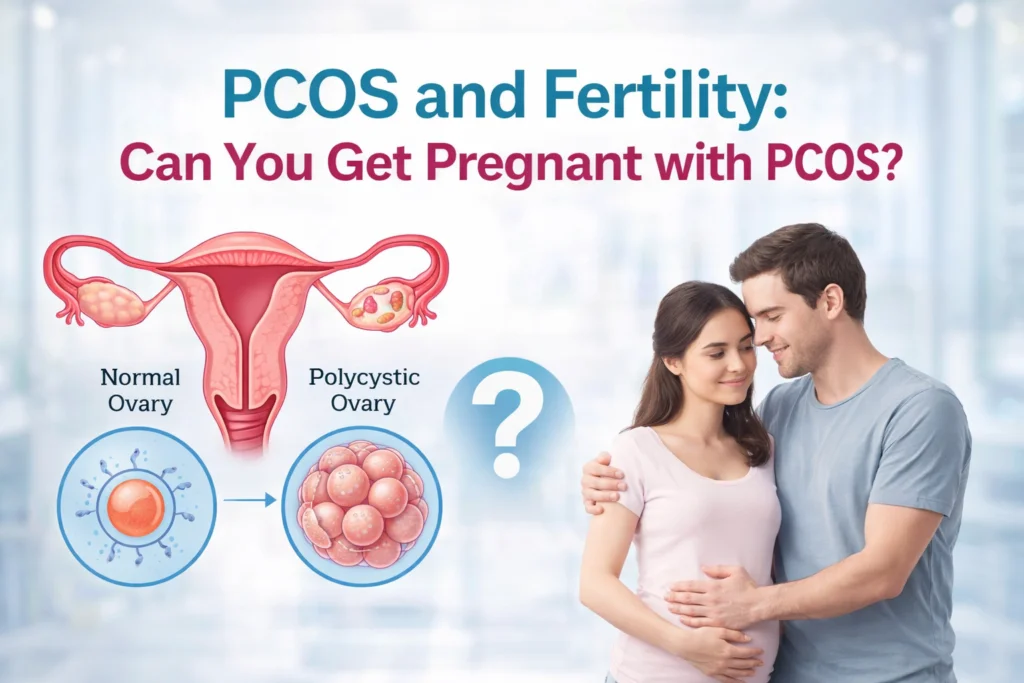
PCOS is a hormonal disorder characterized by elevated androgens (male hormones), irregular or absent ovulation, and polycystic-appearing ovaries on ultrasound. Its impact on fertility is primarily through ovulation disruption.
For conception to occur, an egg must be released each month. In women with PCOS, this ovulation is either irregular or completely absent — making natural conception significantly harder, though not impossible.
Quick Answer: PCOS affects fertility mainly by disrupting ovulation. Without regular ovulation, there is no egg available to be fertilized each month. However, PCOS is one of the most treatable causes of infertility — with several effective medical options to restore or trigger ovulation and support conception.
Other ways PCOS can affect fertility include:
- Hormonal imbalance — elevated LH and insulin levels affect egg quality and endometrial receptivity
- Insulin resistance — present in up to 70% of women with PCOS, affecting hormone regulation
- Irregular periods — making cycle tracking and natural timing difficult
- Higher risk of early miscarriage — possibly linked to poor egg quality or insulin resistance
Can You Get Pregnant Naturally with PCOS?
Yes — some women with PCOS do conceive naturally, particularly those with mild symptoms or who ovulate occasionally. However, the longer ovulation is absent or irregular, the harder natural conception becomes.
Lifestyle changes alone — particularly weight management and dietary improvement — can restore ovulation in some women with PCOS. Even a 5–10% reduction in body weight in women who are overweight has been shown to significantly improve hormonal balance and spontaneous ovulation rates.
Our guide on diet, exercise, and stress management for fertility covers the lifestyle strategies that can meaningfully support PCOS management.
Fertility Treatment Options for PCOS
When lifestyle changes alone are insufficient, several effective medical options are available:
Ovulation Induction Medications such as letrozole or clomiphene citrate stimulate the ovaries to release an egg. Letrozole is now considered the first-line treatment for ovulation induction in PCOS, with strong evidence of effectiveness. This can be combined with timed intercourse or IUI.
IUI with Ovulation Induction A natural next step — once ovulation is triggered, IUI places prepared sperm directly into the uterus at the peak fertile window, improving the chances of fertilization. This is a common and effective approach for PCOS patients.
IVF For women who do not respond to ovulation induction, or who have additional fertility factors, IVF may be recommended. Women with PCOS actually tend to respond well to IVF stimulation — often producing a high number of eggs — though the risk of ovarian hyperstimulation syndrome (OHSS) must be carefully managed. A freeze-all strategy (freezing all embryos and doing a Frozen Embryo Transfer) is often preferred to avoid OHSS risk. Our blog on IVF success rates by age explains how PCOS affects IVF outcomes at different ages.
Metformin For women with significant insulin resistance, metformin may be prescribed alongside fertility treatment to improve hormonal balance and ovulation response.
Dr. Shipra Gupta, Fertibless Clinic: “PCOS is not a barrier to motherhood — it is a condition that responds beautifully to the right treatment. At Fertibless, we individualize the approach for every woman with PCOS, starting with the gentlest, most effective option and building from there.”
Lifestyle Changes That Support PCOS Fertility
Before or alongside medical treatment, these evidence-backed lifestyle measures may improve PCOS and fertility outcomes:
- Low-glycaemic diet — reduces insulin resistance and supports hormonal balance
- Regular moderate exercise — improves insulin sensitivity and reduces androgen levels
- Weight management — even small reductions in weight can restore ovulation
- Stress reduction — chronic stress worsens hormonal dysregulation in PCOS
- Adequate sleep — poor sleep worsens insulin resistance
Conclusion
PCOS and fertility challenges go hand in hand — but they do not have to define your outcome. With a personalized treatment plan that addresses both the medical and lifestyle dimensions of PCOS, parenthood is an achievable goal for the vast majority of women with this condition.
If you have PCOS and are struggling to conceive, consult Dr. Shipra Gupta at Fertibless Clinic for a compassionate, expert assessment of your fertility and a clear plan forward.
📞 +91 92899 36221 | 🌐 www.fertibless.com
Frequently Asked Questions
Is PCOS the same as infertility?
No. PCOS is a hormonal condition that makes conception more difficult, not impossible. With treatment, the majority of women with PCOS are able to conceive. Being diagnosed with PCOS is not a diagnosis of permanent infertility.
Does PCOS get worse with age?
PCOS symptoms can change over time. Interestingly, some women find that irregular periods become more regular as they approach their 30s. However, fertility declines naturally with age regardless of PCOS, making earlier evaluation worthwhile.
Can PCOS cause miscarriage?
Women with PCOS may have a slightly higher risk of early miscarriage, possibly related to elevated LH, insulin resistance, or poor egg quality. Optimizing PCOS management before conception may reduce this risk. Our blog on common pregnancy concerns covers what to watch for during early pregnancy after PCOS treatment.

Dr. Shipra Gupta is a renowned obstetrician, gynaecologist, and infertility specialist, boasting over 17 years of invaluable clinical, teaching, and research experience. She has successfully performed more than 1200 cycles of IUI, IVF, natural cycle IVF, donor egg, and FET cycles. Dr. Gupta specializes in managing complex cases involving Advanced Maternal Age, PCO, Poor Ovarian Reserve, endometriosis, and unexplained infertility. Her expertise extends to treating recurrent IVF failures and male infertility.