
05 Feb IVF Success Rate by Age: How Fertility Changes Over Time
When couples explore IVF Treatment in Delhi, one of the first and most important questions they ask is: “How does age affect IVF success?” Age plays a central role in fertility for both women and men, influencing egg and sperm quality, embryo development, and pregnancy outcomes. Understanding how fertility changes over time helps set realistic expectations, counters common IVF Myths, and guides timely decisions—especially for Fertility Treatment for Older Couple.
This blog explains IVF success rates by age, why they change, and how personalized care can still offer hope at every stage.
Why Age Matters in IVF
Age affects fertility differently for women and men:
- Women: Egg number (ovarian reserve) and egg quality decline with age, particularly after 35.
- Men: Sperm is produced throughout life, but motility, DNA integrity, and genetic stability can decline after 40–45.
In IVF, success depends on healthy eggs, healthy sperm, a receptive uterus, and embryo quality—all of which are influenced by age.
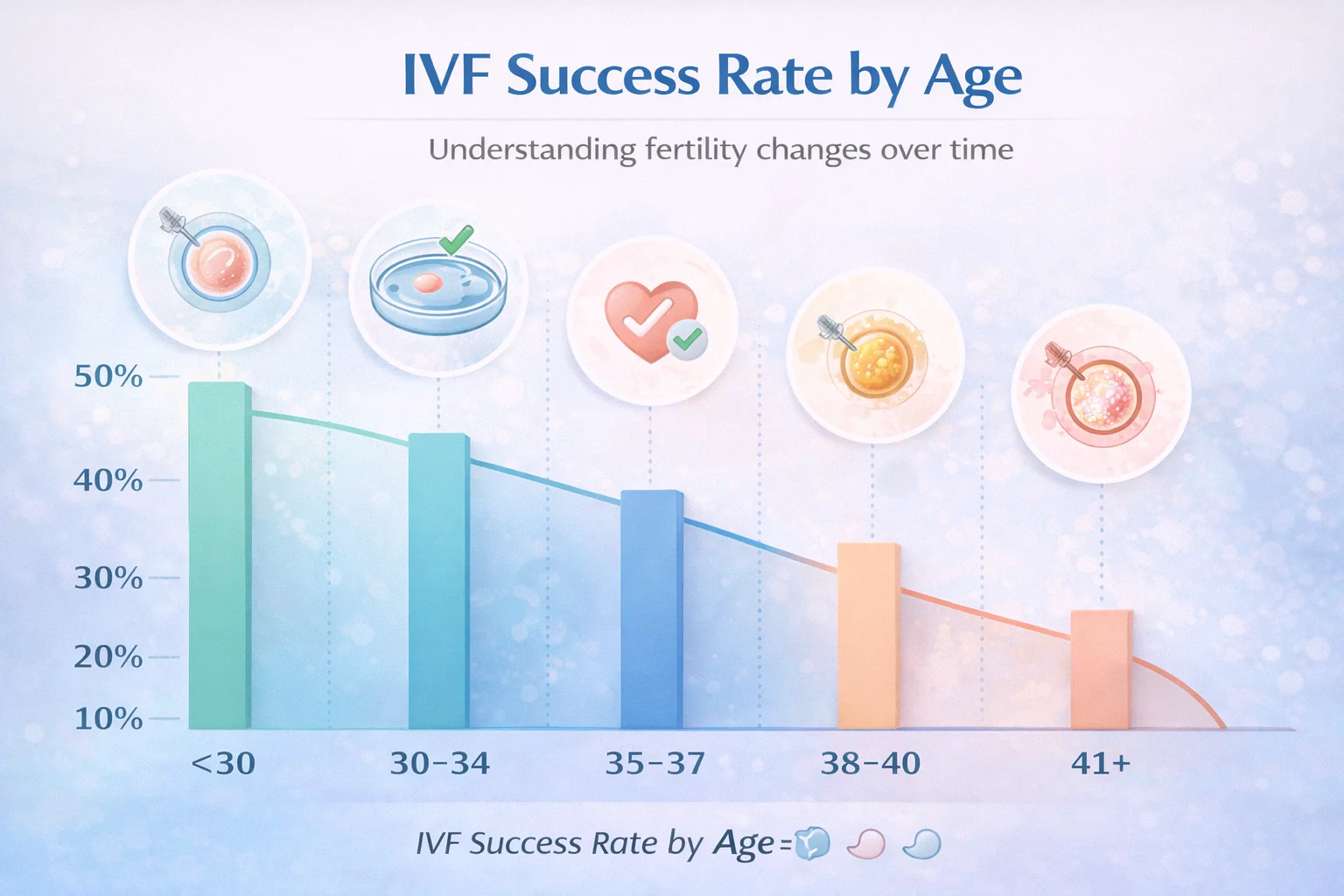
IVF Success Rates by Female Age (General Trends)
Under 30
- Higher success rates
- Excellent egg quality and implantation potential
- Often fewer cycles needed
30–34
- Strong success rates
- Good egg reserve and embryo quality
- Early evaluation improves outcomes
35–37
- Moderate decline begins
- Egg quality starts to drop
- Timely IVF can still be very effective
38–40
- Noticeable decline
- Fewer genetically normal embryos
- More cycles may be required
41–42
- Lower success rates
- Donor egg options may be discussed depending on ovarian reserve
- Highly individualized planning is essential
43 and Above
- Significantly reduced success with own eggs
- Donor egg IVF often offers higher success
- Personalized counseling is crucial
A trusted Fertility Treatment in delhi center will assess ovarian reserve (AMH), ultrasound findings, and medical history to estimate individual chances rather than relying on age alone.
Male Age and IVF: Often Overlooked
One of the most persistent IVF Myths is that age only matters for women. In reality:
- Sperm motility and morphology may decline with age
- DNA fragmentation can increase
- Time to pregnancy may be longer
Male lifestyle factors—smoking, alcohol, obesity, stress, sleep, and heat exposure—can amplify age-related changes. Improving lifestyle can enhance sperm quality within 2–3 months, positively influencing IVF outcomes.
Common IVF Myths About Age—Debunked
Myth 1: IVF Guarantees Pregnancy at Any Age
Truth: IVF improves chances but does not eliminate age-related biological limits.
Myth 2: Age Is the Only Factor That Matters
Truth: Diagnosis, uterine health, embryo quality, and lifestyle also play major roles.
Myth 3: IVF Is Only for Young Couples
Truth: IVF is effective across age groups with personalized protocols, including options like donor eggs when appropriate.
Fertility Treatment for Older Couple: What Changes?
For older couples, fertility care focuses on precision and personalization:
- Comprehensive testing (AMH, hormones, uterine assessment, semen analysis)
- Tailored stimulation protocols
- Advanced embryo selection
- Honest discussions about timelines and alternatives
- Emotional support and counseling
Experienced clinics offering IVF Treatment in Delhi emphasize diagnosis-driven decisions rather than repeating the same approach.
Can IVF Still Work at an Older Age?
Yes—many older couples conceive with IVF, especially when:
- Treatment starts without delay
- Expectations are realistic
- Lifestyle optimization is addressed
- Alternatives (e.g., donor eggs) are considered when medically advised
Success is not just about age—it’s about the right strategy at the right time.
Choosing the Right Fertility Center Matters
A reputable Fertility Treatment in delhi center provides:
- Transparent success data and counseling
- Individualized care plans
- Emotional and psychological support
- Ethical guidance on next steps
Feeling informed and supported is as important as the medical protocol itself.
Final Thoughts
Age influences IVF success—but it does not define your entire fertility story. By understanding how fertility changes over time, dispelling IVF Myths, and seeking timely, personalized care, couples can make empowered decisions. Whether you’re early in your journey or considering Fertility Treatment for Older Couple, expert guidance can turn uncertainty into clarity and hope.
Frequently Asked Questions
How does age affect IVF success rates?
IVF success rates decline with age, especially after 35, due to reduced egg quality and quantity. However, outcomes vary based on overall health and treatment approach.
Is IVF effective for older couples?
Yes. Fertility treatment for older couple can still be successful with personalized protocols, timely intervention, and options like donor eggs when advised.
Do IVF myths about age create false expectations?
Yes. One common IVF myth is that IVF guarantees pregnancy at any age. In reality, IVF improves chances but cannot completely overcome age-related fertility decline.
Does male age affect IVF outcomes?
Yes. Male age can impact sperm quality and DNA integrity. Male lifestyle factors such as smoking, alcohol, stress, and sleep play an important role in IVF success.
Why choose IVF treatment in Delhi for age-related fertility issues?
IVF treatment in Delhi offers advanced diagnostics, experienced specialists, personalized care plans, and ethical guidance—especially important for age-related fertility challenges.

Dr. Shipra Gupta is a renowned obstetrician, gynaecologist, and infertility specialist, boasting over 17 years of invaluable clinical, teaching, and research experience. She has successfully performed more than 1200 cycles of IUI, IVF, natural cycle IVF, donor egg, and FET cycles. Dr. Gupta specializes in managing complex cases involving Advanced Maternal Age, PCO, Poor Ovarian Reserve, endometriosis, and unexplained infertility. Her expertise extends to treating recurrent IVF failures and male infertility.