
02 Feb IVF and Reproductive Health: Myths, Emotional and Social Impacts
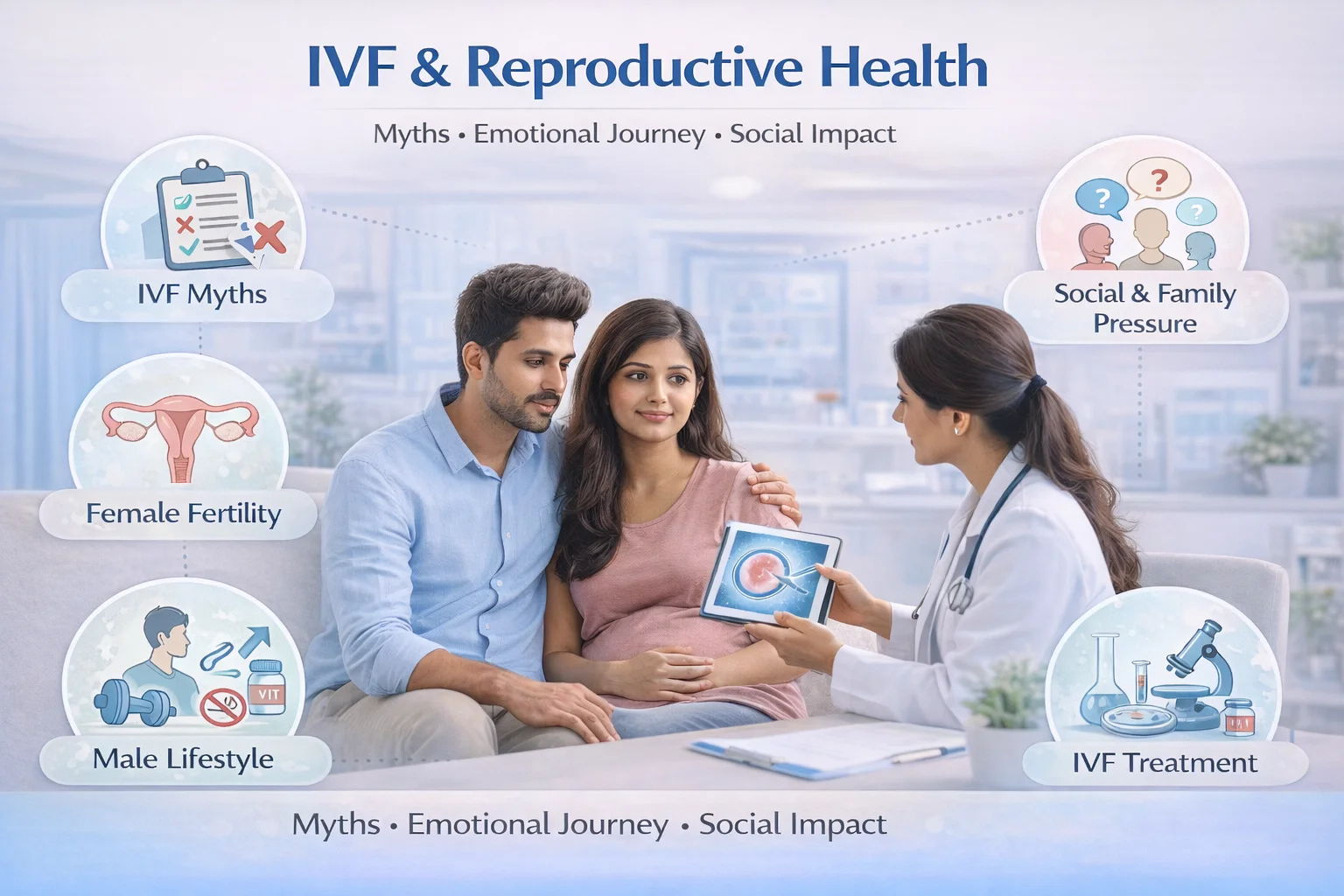
IVF Treatment has helped thousands of couples move closer to parenthood. Despite medical progress and improving success rates, IVF is still surrounded by myths, emotional stress, and social pressures. Understanding the facts about IVF, its impact on Female Fertility, and the role of Male Lifestyle can help couples approach treatment with clarity, confidence, and compassion.
This blog breaks down common IVF myths and explores the emotional and social realities many couples experience during their fertility journey.
Understanding IVF and Reproductive Health
In vitro fertilization (IVF) is a medically proven fertility treatment where eggs and sperm are fertilized in a laboratory and the resulting embryo is transferred into the uterus. IVF supports reproductive health by offering solutions for:
- Tubal blockages
- Ovulation disorders
- Advanced maternal age
- Male factor infertility
- Unexplained infertility
At a trusted Fertility Centre in Delhi, IVF is not a “last resort” but one of several personalized treatment options based on diagnosis, age, and overall health.
Common Myths About IVF—Debunked
Myth 1: IVF Is Only for Women
Reality: Infertility affects both partners. Nearly half of infertility cases involve male factors. Male Lifestyle—including smoking, alcohol intake, stress, sleep, and diet—can significantly affect sperm quality and IVF outcomes.
Myth 2: IVF Guarantees Pregnancy
Reality: IVF improves chances but does not guarantee success. Outcomes depend on age, egg and sperm quality, uterine health, and underlying conditions affecting Female Fertility.
Myth 3: IVF Babies Are Not “Normal”
Reality: IVF-conceived children are as healthy as naturally conceived children. Decades of research confirm normal physical and cognitive development.
Myth 4: IVF Is Always Painful and Risky
Reality: Modern IVF protocols prioritize safety and comfort. Most procedures are minimally invasive, and risks are carefully managed by experienced specialists.
Myth 5: Stress Alone Causes IVF Failure
Reality: Stress does not “cause” IVF to fail, but chronic stress can affect hormones, sleep, and overall well-being—factors that influence reproductive health.
Emotional Impact of IVF
IVF is not just a medical process—it’s an emotional journey.
Common emotions include:
- Anxiety during stimulation and scans
- Fear of failure or negative results
- Emotional exhaustion after repeated cycles
- Guilt or self-blame
- Difficulty celebrating others’ pregnancies
These feelings are valid and common. Emotional support, counseling, and open communication with your care team can significantly ease the burden.
Many Fertility Centres in Delhi now integrate counseling and mind–body support as part of holistic fertility care.
Social Pressures Around IVF
Beyond medical and emotional challenges, IVF can bring social stress—especially in close-knit communities.
Couples may face:
- Repeated questions about pregnancy timelines
- Unwanted advice or comparisons
- Pressure from family or society
- Stigma around assisted reproduction
- Privacy concerns
Setting boundaries, sharing information selectively, and seeking supportive communities can help couples protect their emotional space.
IVF and Female Fertility: More Than Egg Numbers
While age and ovarian reserve are important, Female Fertility is multifaceted. IVF outcomes are influenced by:
- Hormonal balance
- Uterine health
- Metabolic factors
- Emotional well-being
- Lifestyle and nutrition
Personalized protocols and early evaluation can optimize outcomes—especially when treatment is started without unnecessary delays.
Male Lifestyle: A Key IVF Success Factor
IVF success is strongly linked to sperm health. Improving Male Lifestyle can enhance results within a few months.
Positive changes include:
- Quitting smoking and limiting alcohol
- Regular moderate exercise
- Adequate sleep
- Stress management
- Balanced nutrition rich in antioxidants
- Avoiding excessive heat exposure
Small, consistent changes can lead to meaningful improvements in sperm quality and embryo development.
How a Supportive Fertility Centre Makes a Difference
Choosing the right Fertility Centre in Delhi can shape both medical outcomes and emotional experience. Patient-centric centres focus on:
- Honest conversations and realistic expectations
- Diagnosis-driven treatment plans
- Emotional and psychological support
- Privacy and confidentiality
- Ethical, transparent care
Feeling heard, informed, and supported is as important as advanced technology.
Building Emotional Resilience During IVF
Helpful strategies include:
- Counseling or support groups
- Mindfulness, yoga, or meditation
- Clear communication with your partner
- Taking breaks when needed
- Celebrating small milestones
Resilience doesn’t mean “staying strong all the time”—it means allowing space for emotions while continuing forward with support.
Final Thoughts
IVF is a journey of science, hope, patience, and courage. Dispelling myths, acknowledging emotional realities, and addressing social pressures empower couples to make informed decisions about their reproductive health.
With the right guidance, supportive care, and healthy lifestyle choices, IVF Treatment in Delhi can be a positive, respectful path toward parenthood—one that honors both medical needs and emotional well-being.
Frequently Asked Questions
Does IVF affect long-term reproductive health?
No. IVF does not harm long-term reproductive health. When done under expert supervision, it is a safe and well-established fertility treatment.
Is IVF only related to female fertility problems?
No. IVF addresses both female fertility and male factors. Male lifestyle habits such as smoking, alcohol use, stress, and poor sleep can significantly impact IVF outcomes.
Why is IVF emotionally challenging for couples?
IVF involves uncertainty, repeated testing, and high emotional investment. Anxiety, fear of failure, and emotional exhaustion are common and completely normal.
How can couples manage social pressure during IVF treatment?
Couples can manage social pressure by setting boundaries, sharing information selectively, seeking counseling, and connecting with supportive healthcare providers or peer groups.
How do fertility centres in Delhi support emotional well-being?
A good fertility centre in Delhi offers counseling, clear communication, realistic expectations, privacy, and compassionate care alongside medical treatment.

Dr. Shipra Gupta is a renowned obstetrician, gynaecologist, and infertility specialist, boasting over 17 years of invaluable clinical, teaching, and research experience. She has successfully performed more than 1200 cycles of IUI, IVF, natural cycle IVF, donor egg, and FET cycles. Dr. Gupta specializes in managing complex cases involving Advanced Maternal Age, PCO, Poor Ovarian Reserve, endometriosis, and unexplained infertility. Her expertise extends to treating recurrent IVF failures and male infertility.