
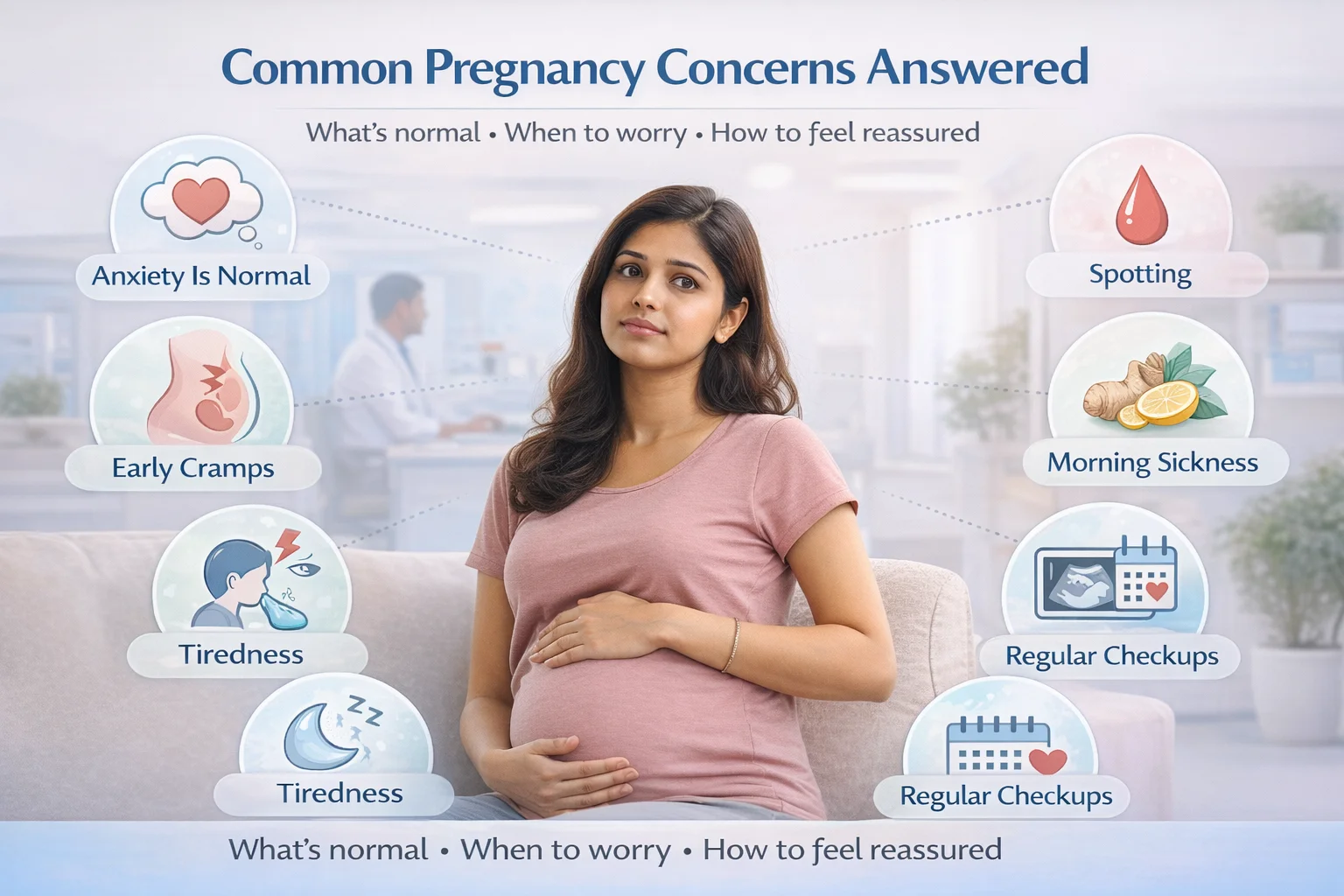
29 Jan Common Pregnancy Concerns Answered
Pregnancy is a beautiful phase, but it often comes with questions, doubts, and worries—especially in the early months. Whether conception happened naturally or after fertility treatment, it’s normal for expecting parents to feel anxious about every symptom, scan, and milestone.
Many pregnancy concerns are common, expected, and usually harmless, yet they can feel overwhelming without the right information. This blog answers some of the most frequently asked pregnancy-related concerns, helping you feel reassured, informed, and confident during this important journey.
Is It Normal to Feel Anxious During Pregnancy?
Yes—very normal.
Pregnancy brings hormonal changes, emotional shifts, and a sense of responsibility that can trigger anxiety, even in otherwise calm individuals. This is especially true for couples who have:
- Faced infertility or pregnancy loss
- Conceived after fertility treatment
- Waited a long time to become parents
Feeling worried does not mean something is wrong. Talking openly with your doctor, partner, or counselor can significantly ease anxiety and help you enjoy the pregnancy more fully.
Are Mild Cramps Normal in Early Pregnancy?
Mild cramping during early pregnancy is quite common and usually not a cause for concern.
Possible reasons include:
• Implantation of the embryo
• Uterine stretching
• Hormonal changes
• Increased blood flow to the pelvic region
However, severe pain, one-sided pain, or cramps with heavy bleeding should always be reported to your doctor immediately.
What Does Spotting or Light Bleeding Mean?
Light spotting can occur in early pregnancy and does not always indicate a problem.
Common causes include:
• Implantation bleeding
• Cervical sensitivity
• Recent intercourse
• Internal examinations
That said, any bleeding during pregnancy should be evaluated, especially if it is accompanied by pain, clots, or dizziness. Early medical assessment helps rule out complications and provides reassurance.
How Much Nausea Is Normal?
Morning sickness—nausea with or without vomiting—is extremely common, especially in the first trimester.
You may experience:
• Nausea triggered by smells
• Vomiting once or multiple times a day
• Loss of appetite
• Food aversions
While uncomfortable, mild to moderate nausea is usually a sign of normal hormonal changes. If vomiting is excessive, persistent, or leads to dehydration, medical treatment may be required.
Is Fatigue Normal Throughout Pregnancy?
Yes. Feeling unusually tired is one of the most common pregnancy symptoms.
Fatigue can be caused by:
• Hormonal changes
• Increased blood production
• Emotional stress
• Poor sleep
Rest, proper nutrition, hydration, and gentle activity can help manage tiredness. Severe or sudden fatigue should be discussed with your doctor to rule out anemia or thyroid issues.
How Often Should Ultrasounds and Checkups Be Done?
The number of scans and visits depends on:
• Gestational age
• Medical history
• Whether the pregnancy is high-risk
• Method of conception
Early pregnancy may involve more frequent visits for reassurance, especially after fertility treatment. As pregnancy progresses, visits usually follow a standard antenatal schedule unless closer monitoring is required.
Is It Normal to Worry About Every Scan and Report?
Absolutely.
Waiting for scan results or blood reports can feel stressful, especially after a long fertility journey. Many parents fear “bad news” even when everything is progressing normally.
These fears are common and understandable. Sharing concerns with your doctor and asking questions—no matter how small—can reduce unnecessary stress and help you feel supported.
Can Stress Harm the Baby?
Occasional stress is unlikely to harm your pregnancy. However, chronic or severe stress may affect sleep, appetite, and emotional well-being.
Helpful ways to manage stress include:
• Deep breathing or meditation
• Prenatal yoga or gentle exercise
• Adequate rest
• Talking to loved ones
• Professional counseling when needed
Emotional well-being is an important part of a healthy pregnancy.
What Symptoms Should Never Be Ignored?
While many symptoms are normal, seek immediate medical attention if you experience:
• Heavy bleeding
• Severe abdominal pain
• Persistent vomiting
• High fever
• Sudden swelling of face or hands
• Severe headache or blurred vision
• Reduced fetal movements (later in pregnancy)
Trust your instincts—if something feels wrong, it’s always okay to consult your doctor.
Is It Normal to Feel Emotionally Overwhelmed?
Yes. Pregnancy emotions can range from happiness and excitement to fear and doubt—sometimes all in the same day.
Hormonal shifts, physical changes, and future responsibilities can feel overwhelming. Emotional ups and downs do not mean you are ungrateful or unprepared—they mean you are human.
Supportive care, reassurance, and patience with yourself are essential.
Final Thoughts
Pregnancy is a journey filled with questions, emotions, and learning. Most concerns during pregnancy are normal and manageable with the right guidance. Staying informed, attending regular checkups, and maintaining open communication with your healthcare provider can make this phase calmer and more reassuring.
Remember—you don’t need to face pregnancy worries alone. Asking questions, seeking clarity, and caring for your emotional health are just as important as physical care.
Frequently Asked Questions
Are pregnancy symptoms the same for everyone?
No. Every pregnancy is different. Some women experience strong symptoms, while others have very mild or no symptoms at all—and both can be normal.
Is it normal to feel anxious even when reports are normal?
Yes. Anxiety during pregnancy is common, especially after infertility or previous loss. Emotional reassurance and open communication with your doctor help greatly.
When should I contact my doctor during pregnancy?
You should contact your doctor if you experience heavy bleeding, severe pain, persistent vomiting, fever, sudden swelling, or anything that feels unusual or concerning.
Can pregnancy concerns affect the baby?
Occasional worry is normal and usually harmless. However, prolonged stress should be addressed with relaxation techniques, support, or counseling.
Is frequent reassurance normal during pregnancy?
Absolutely. Seeking reassurance through checkups or questions is common and healthy, especially in early pregnancy or after fertility treatment.

Dr. Shipra Gupta is a renowned obstetrician, gynaecologist, and infertility specialist, boasting over 17 years of invaluable clinical, teaching, and research experience. She has successfully performed more than 1200 cycles of IUI, IVF, natural cycle IVF, donor egg, and FET cycles. Dr. Gupta specializes in managing complex cases involving Advanced Maternal Age, PCO, Poor Ovarian Reserve, endometriosis, and unexplained infertility. Her expertise extends to treating recurrent IVF failures and male infertility.