
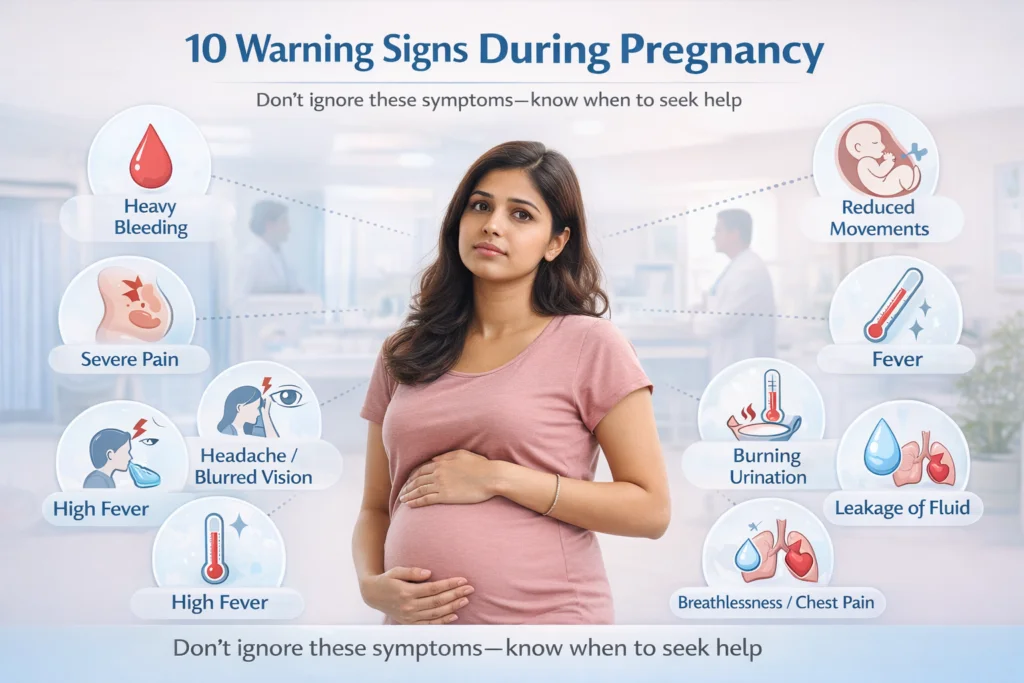
27 Jan 10 Warning Signs During Pregnancy You Should Not Ignore
Pregnancy brings many physical and emotional changes—most of them normal. However, some symptoms signal the need for immediate medical attention. Recognizing warning signs early can prevent complications and protect both mother and baby.
This guide outlines 10 pregnancy warning signs you should never ignore, when to act, and why timely care matters.
Heavy Vaginal Bleeding
Light spotting can be normal early on, but heavy bleeding, soaking pads, passing clots, or bleeding with pain is not normal at any stage.
Possible concerns: miscarriage, ectopic pregnancy, placental problems.
What to do: Seek urgent medical care.
Severe or Persistent Abdominal Pain
Mild cramps can occur, but sharp, severe, or one-sided pain—especially with bleeding, dizziness, or fever—needs evaluation.
Possible concerns: ectopic pregnancy, placental abruption, infection.
What to do: Contact your doctor immediately.
Reduced or Absent Fetal Movements (After 28 Weeks)
Once movements are regular, a noticeable decrease or no movement is a red flag.
Possible concerns: fetal distress.
What to do: Don’t wait—get assessed the same day.
Severe Headache, Blurred Vision, or Dizziness
Occasional headaches are common, but persistent headaches with visual changes are not.
Possible concerns: high blood pressure disorders (e.g., preeclampsia).
What to do: Get checked promptly.
Sudden Swelling of Face, Hands, or Feet
Mild swelling is common, but sudden or severe swelling, especially with headache or vision issues, is concerning.
Possible concerns: preeclampsia.
What to do: Seek medical advice urgently.
High Fever (Above 38°C)
A fever that doesn’t settle can indicate infection.
Possible concerns: infections that may affect pregnancy.
What to do: Contact your healthcare provider for evaluation and safe treatment.
Persistent Vomiting or Inability to Keep Fluids Down
Morning sickness is common; continuous vomiting is not.
Possible concerns: dehydration, electrolyte imbalance (hyperemesis gravidarum).
What to do: Medical treatment may be needed.
Pain or Burning While Urinating
Urinary symptoms should never be ignored during pregnancy.
Possible concerns: urinary tract infection, which can trigger preterm labor if untreated.
What to do: Get a urine test and treatment.
Leakage of Fluid From the Vagina
A sudden gush or constant trickle of clear fluid may indicate ruptured membranes.
Possible concerns: preterm labor, infection risk.
What to do: Go to the hospital immediately.
Severe Shortness of Breath or Chest Pain
Mild breathlessness can occur, but sudden or severe symptoms are emergencies.
Possible concerns: blood clots, heart or lung issues.
What to do: Seek emergency care right away.
Trust Your Instincts
If something feels wrong—even if it’s not on this list—it’s always okay to seek help. Early assessment often brings reassurance and can be lifesaving when intervention is needed.
Global health bodies like the World Health Organization emphasize timely antenatal care and prompt evaluation of danger signs to reduce pregnancy-related risks.
Final Thoughts
Most pregnancies progress normally, but awareness of warning signs empowers you to act quickly. Regular checkups, open communication with your healthcare team, and listening to your body are key to a safer pregnancy journey.
Frequently Asked Questions
Are all pregnancy pains dangerous?
No. Mild aches are common. Severe, persistent, or worsening pain should be evaluated.
Is spotting always a problem?
Light spotting can be normal early on, but heavy bleeding or bleeding with pain needs urgent assessment.
When should fetal movements start?
Most women feel movements by 18–22 weeks. After 28 weeks, reduced movements are a warning sign.
Can stress cause warning symptoms?
Stress can worsen discomforts, but it doesn’t explain red flags like heavy bleeding, high fever, or severe pain.
Should I wait for my next appointment if I’m worried?
No. If you’re concerned, contact your doctor immediately—don’t wait.

Dr. Shipra Gupta is a renowned obstetrician, gynaecologist, and infertility specialist, boasting over 17 years of invaluable clinical, teaching, and research experience. She has successfully performed more than 1200 cycles of IUI, IVF, natural cycle IVF, donor egg, and FET cycles. Dr. Gupta specializes in managing complex cases involving Advanced Maternal Age, PCO, Poor Ovarian Reserve, endometriosis, and unexplained infertility. Her expertise extends to treating recurrent IVF failures and male infertility.